Cupping Therapy



Cupping Therapy
What Is Cupping Therapy?
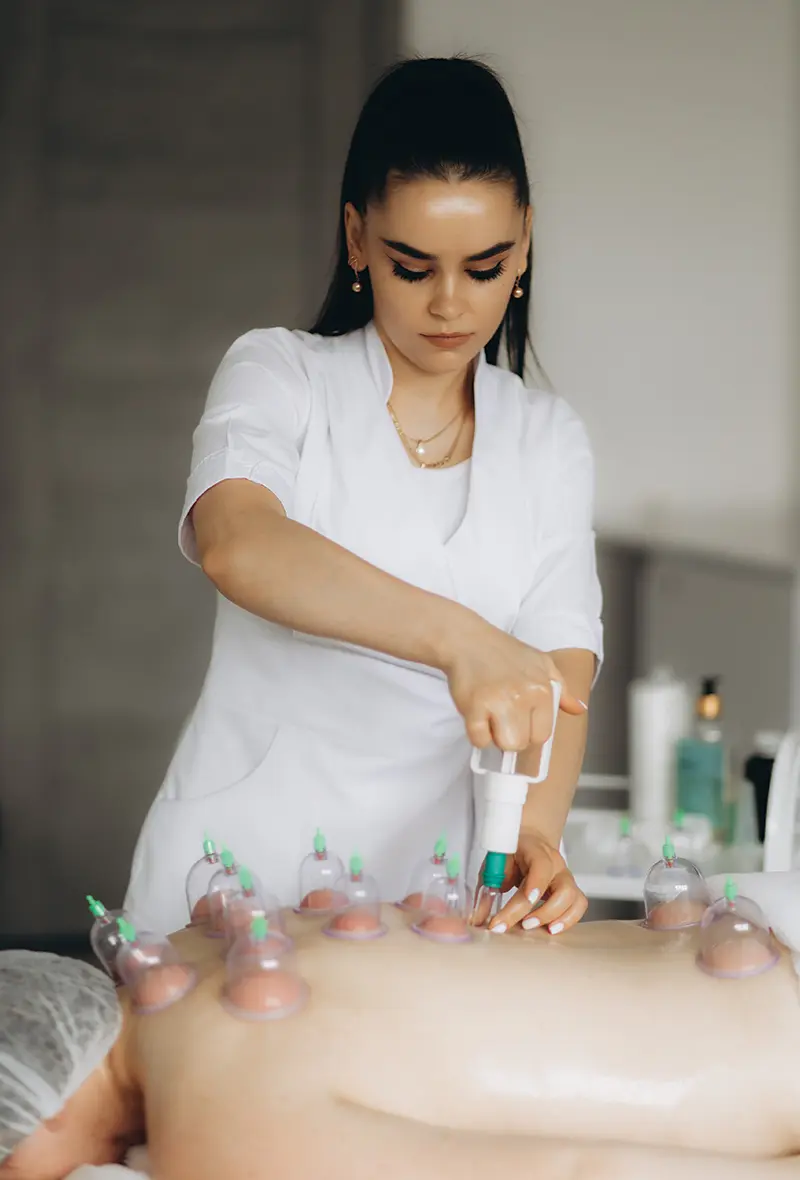
Cupping therapy, referred to in modern rehabilitation as myofascial decompression (MFD), is a negative-pressure soft tissue technique that uses specialized cups applied to the skin to create suction. Unlike virtually all other manual therapy techniques, which work by compressing tissue downward, cupping works in the opposite direction. It lifts and separates the skin, fascia, and underlying soft tissue layers away from each other, creating a decompressive mechanical effect that influences blood flow, fascial mobility, pain signaling, and neuromuscular function.
The negative pressure generated by the cups draws the skin and superficial fascia upward into the cup, mechanically separating tissue layers that may have become adhered, restricted, or densified due to injury, overuse, immobility, or surgical scarring. This decompression creates space within the subcutaneous and fascial compartments, allowing for improved local circulation, enhanced lymphatic drainage, fascial gliding restoration, and the release of tension in the underlying musculature.
While cupping has ancient roots in traditional medicine systems across multiple cultures, its modern application in physical therapy and sports medicine is grounded in Western biomechanical, neurophysiological, and tissue healing principles. Modern myofascial decompression uses plastic, silicone, or pneumatic cups with controlled suction rather than traditional fire cupping, allowing for precise pressure control and consistent clinical application.
At Shiva Physical Therapy, cupping therapy is applied as a clinical intervention within a comprehensive regenerative framework. It is not used as a standalone wellness technique or applied based on generic protocols.
How It Works
Cupping therapy works by generating controlled negative pressure (suction) at the treatment site, creating a decompressive mechanical force that lifts the skin and fascial layers away from the underlying muscle and deeper structures. This mechanism is fundamentally different from all compressive manual therapy techniques such as massage, myofascial release, and soft tissue mobilization, which push tissue downward
When the cup is applied and suction is created, several physiological events occur:
-

The skin and subcutaneous fascia are drawn upward into the cup, mechanically separating tissue layers that may be adhered or restricted
-
The negative pressure creates a transient period of localized tissue ischemia (reduced blood flow) beneath the cup during application
-
Upon removal of the cup, a reactive hyperemic response occurs, resulting in a rapid and significant increase in local blood flow to the treated area, bringing oxygen, nutrients, and healing factors to previously hypoxic or stagnant tissue
-
The mechanical lift on the fascia stretches and separates fascial layers, breaking up adhesions between the superficial fascia, deep fascia, and underlying muscle
-
Lymphatic vessels are stimulated by the negative pressure, facilitating drainage of metabolic waste products, inflammatory mediators, and excess fluid from the treated area
-
Mechanoreceptors in the skin and fascia are stimulated by the suction and lifting force, modulating pain signaling through gate control mechanisms and altering afferent input to the central nervous system
-
The fascial tissue beneath the cup undergoes a decompressive stretch that differs from traditional elongation, potentially influencing tissue viscosity, hydration, and gliding properties
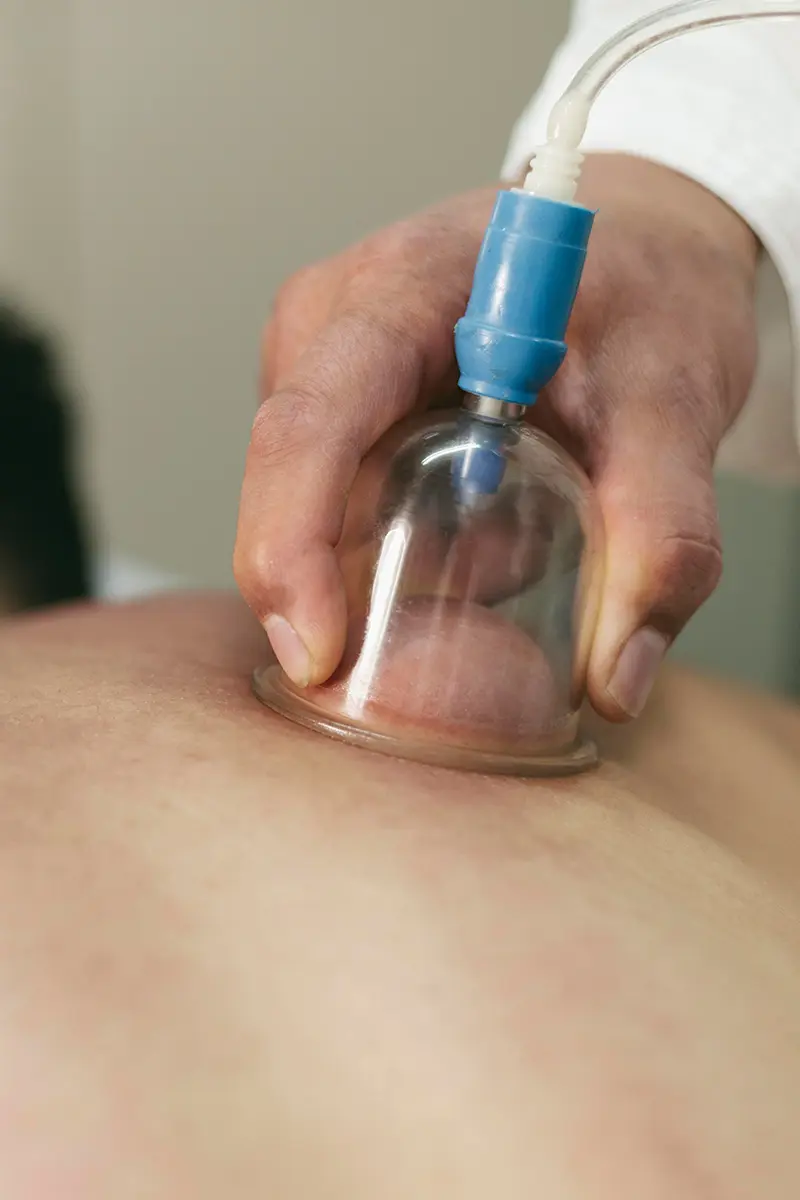
Research has demonstrated that cupping therapy produces measurable increases in skin blood flow following cup removal, with the magnitude and pattern of the hyperemic response dependent on the negative pressure applied and the duration of application. Studies using laser Doppler flowmetry have confirmed that reactive hyperemia occurs consistently after cupping, supporting the biological plausibility of the tissue perfusion mechanism.
When cupping is combined with active movement (dynamic myofascial decompression), the therapeutic effect is amplified. The patient moves through functional ranges of motion while the cups remain in place, creating a simultaneous decompressive and mobilization effect that addresses fascial restriction, neuromuscular patterning, and movement dysfunction concurrently.
Why It’s Different
Cupping therapy is fundamentally different from all other manual soft tissue techniques because of its decompressive mechanism. While massage, myofascial release, instrument-assisted techniques, and manual mobilization all work by pressing into tissue from the outside, cupping is the only manual therapy technique that lifts tissue away from the body. This creates a unique biomechanical environment that cannot be replicated by any compressive approach.
Cupping therapy is different because it: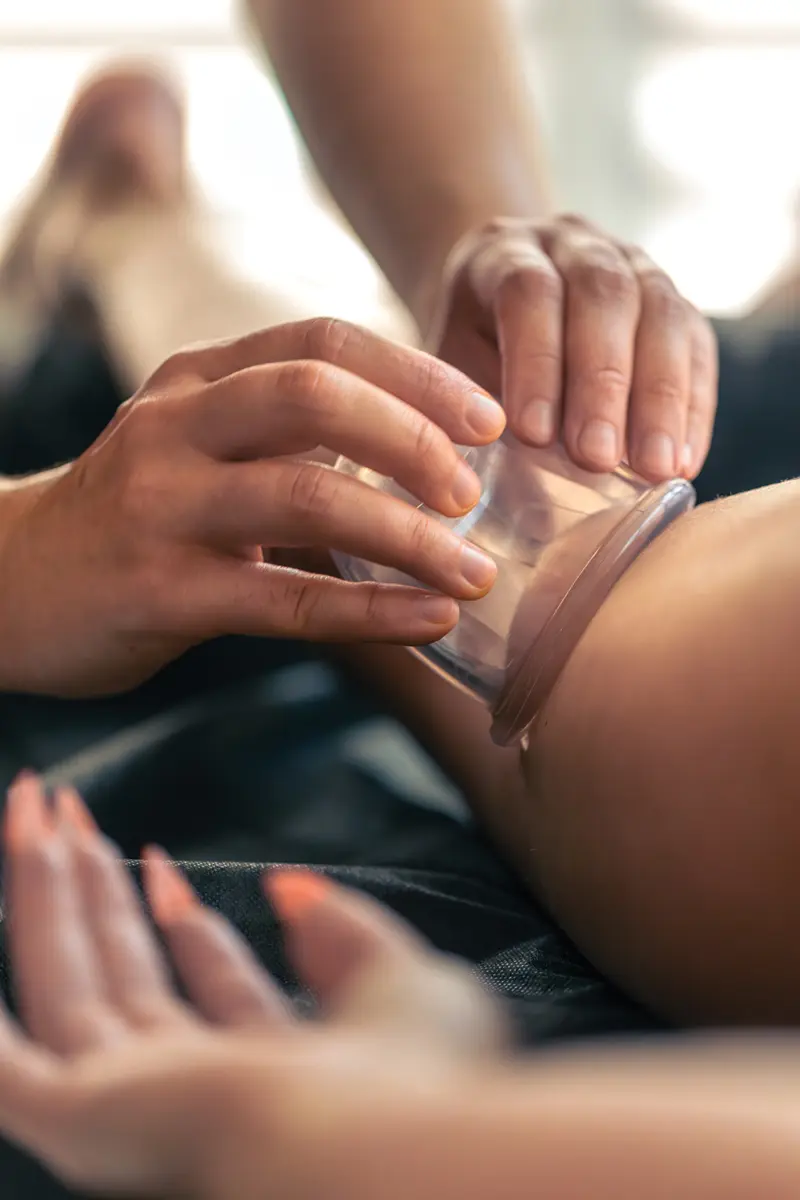

Creates a decompressive force that lifts and separates tissue layers rather than compressing them
Produces a reactive hyperemic response that significantly increases local blood flow and tissue perfusion after cup removal
Mechanically separates fascial layers, addressing inter-layer adhesions that compressive techniques may not reach
Stimulates lymphatic drainage through the negative pressure effect, facilitating waste removal and fluid clearance
Can be combined with active patient movement (dynamic myofascial decompression) to simultaneously address fascial restriction and neuromuscular patterning
Provides both diagnostic and therapeutic value, as the tissue response to cupping (color of skin marks, tissue mobility, patient response) provides clinical information about local tissue health and circulation
Offers an alternative approach for patients who are sensitive to deep compressive pressure but can tolerate the lifting and stretching sensation of decompression
By working in the decompressive direction, cupping therapy accesses tissue layers and creates mechanical effects that compressive techniques cannot achieve. It is particularly valuable as a complement to other interventions, preparing tissue for subsequent manual therapy, loading, or movement training by first creating space, improving circulation, and reducing fascial restriction.
Research and clinical observation suggest that cupping therapy may contribute to several biological and physiological responses:

Reactive hyperemia following cup removal, producing a significant increase in local skin blood flow and tissue perfusion
Increased delivery of oxygen, nutrients, and healing factors to previously hypoxic or metabolically stagnant tissue
Stimulation of new capillary formation (neovascularization) in chronically ischemic tissue through repeated hyperemic responses
Enhanced venous return and lymphatic drainage from the treated area, facilitating clearance of metabolic waste and inflammatory mediators
Reduction of protective guarding
May contribute to improved connective tissue mobility
These mechanisms can help create a more favorable environment for healing when combined with movement-based rehabilitation.
Clinical Benefits
Cupping therapy is used to create a decompressive mechanical environment that improves tissue perfusion, fascial mobility, and pain signaling in the treated area. It helps create conditions under which the body's natural healing processes can function more effectively and under which other therapeutic interventions can produce better results.
-
Immediate pain reduction in the treated area
-
Improved range of motion and flexibility
-
Decreased muscle tension and protective guarding
-
Improved soft tissue extensibility
-
Reduced swelling and local edema
-
Enhanced blood flow and tissue perfusion to previously stagnant areas
-
Improved fascial gliding and reduced adhesion
-
Scar tissue softening and improved mobility around surgical or traumatic scars
-
Improved movement quality when combined with active mobilization (dynamic cupping)
-
Better tolerance of subsequent manual therapy, exercise, and progressive loading
Each person's response depends on the nature of their condition, tissue reactivity, and how cupping is integrated within their broader treatment plan.
At Shiva Physical Therapy, multiple cupping techniques are used depending on the clinical goal, the patient's condition, tissue sensitivity, and the phase of recovery. Only dry cupping methods are used in our practice. The type and application of cupping is always based on clinical reasoning and individual evaluation findings.
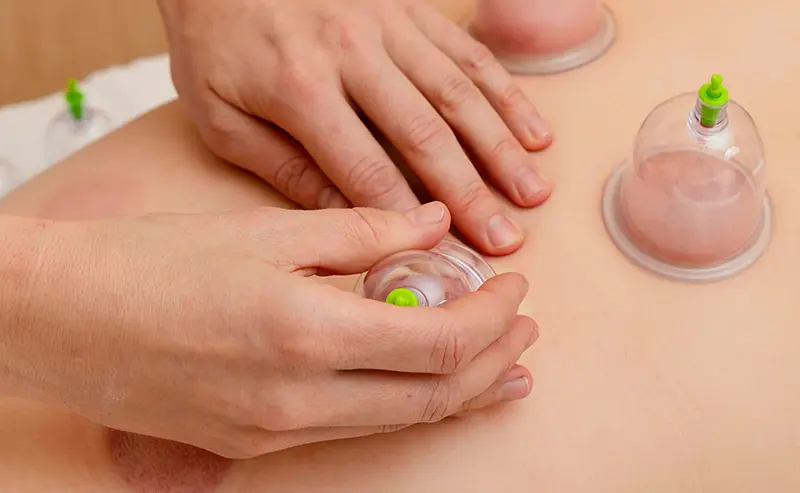
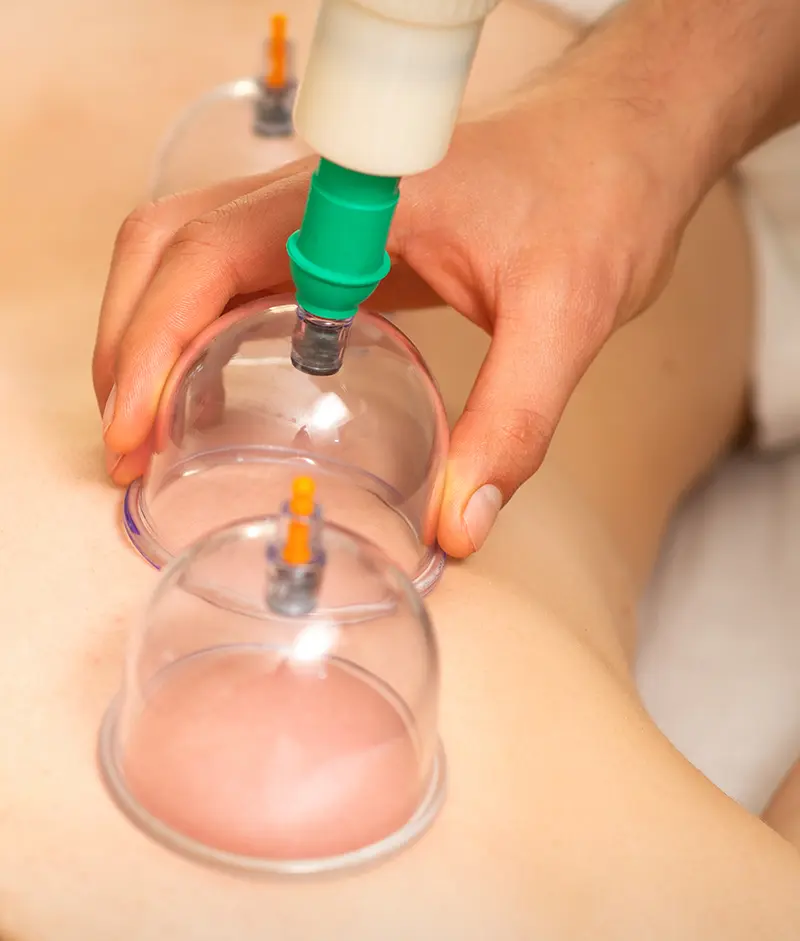
In static cupping, cups are placed on the skin over the target area and suction is applied. The cups remain stationary for a controlled duration, typically 3 to 10 minutes, depending on tissue sensitivity and clinical goals. Static cupping creates sustained negative pressure that produces tissue ischemia during application followed by reactive hyperemia upon cup removal. It is particularly useful for localized areas of muscle tension, fascial restriction, trigger point regions, and areas with poor local circulation. The intensity of suction is adjusted based on patient tolerance and tissue response.
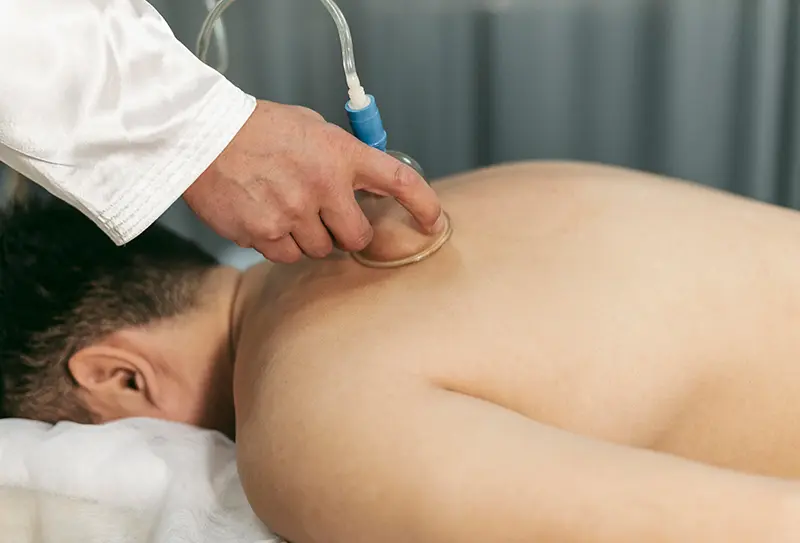
In dynamic cupping, a silicone or plastic cup is applied to the skin with suction and then moved or glided across the tissue surface while maintaining the decompressive lift. A topical emollient is applied to the skin to allow smooth gliding. Dynamic cupping combines the decompressive effect of the negative pressure with a mobilization effect similar to instrument-assisted or manual fascial techniques, but in the opposite direction. It is used to address broader areas of fascial restriction, improve inter-layer fascial gliding, and mobilize scar tissue along its length. Dynamic cupping is often described as feeling like a deep tissue massage in reverse.
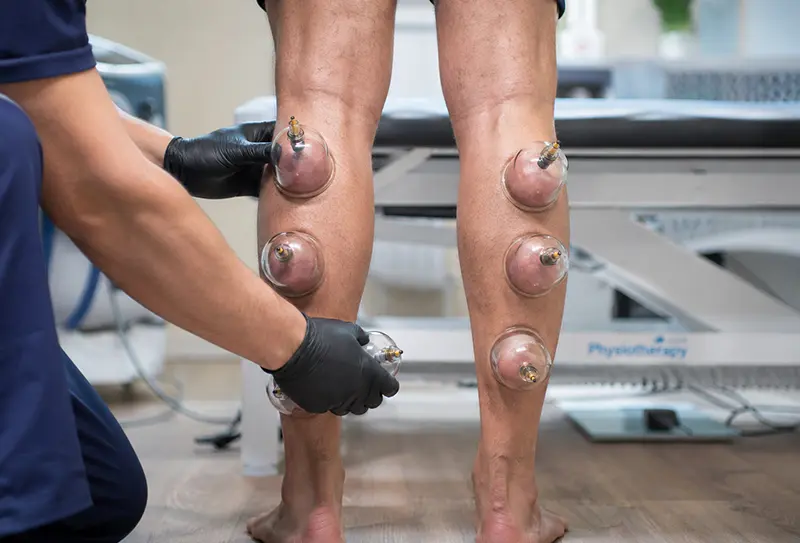
This is the most clinically integrated form of cupping therapy. Cups are applied with suction over the target tissue, and the patient then performs active movements through functional ranges of motion while the cups remain in place. This approach simultaneously addresses fascial restriction (through the decompressive lift), neuromuscular patterning (through active movement under load), and proprioceptive re-education (through the novel sensory input of movement with tissue decompression). Myofascial decompression with movement is particularly effective for addressing compensatory movement patterns, improving active mobility in restricted areas, and bridging the gap between passive tissue treatment and active functional training.
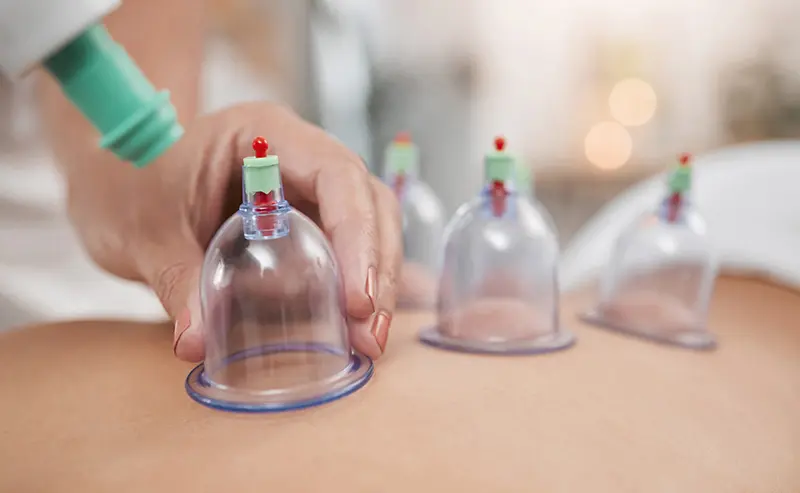
Using very light suction with silicone cups, lymphatic decompression cupping is designed to facilitate superficial lymphatic flow and reduce local edema. The cups are applied with minimal pressure and may be glided gently in the direction of lymphatic drainage pathways. This approach is used in post-surgical and post-traumatic swelling management, as well as in conditions where improving fluid dynamics in the subcutaneous tissue is a clinical priority.
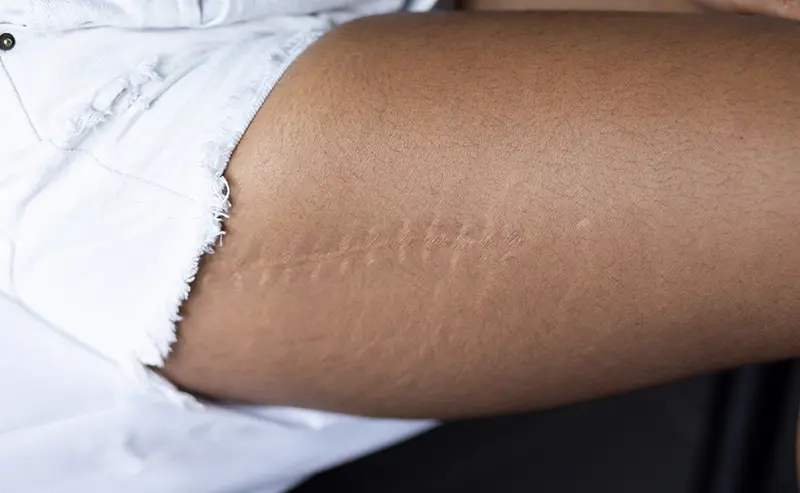
Cups are applied directly over or around scar tissue from surgery or trauma to create a decompressive lift that mechanically separates scar adhesions from underlying tissue layers. This approach works by pulling the scar tissue upward rather than pressing into it, which can be more comfortable for patients with sensitive scars and may access adhesion planes that compressive scar mobilization techniques cannot reach. Scar mobilization cupping is often combined with active movement to restore functional mobility around the scar.
The type of cupping technique used depends on individual evaluation findings, clinical goals, tissue reactivity, and the phase of recovery. Your clinician will explain the purpose of each application and what to expect.
Conditions Commonly Treated
Cupping therapy is commonly considered when clinical evaluation suggests that fascial restriction, tissue adhesion, poor local circulation, muscle tension, or movement dysfunction may benefit from a decompressive approach to tissue mobilization.
Cupping therapy may be helpful for:
-

Chronic neck pain and cervical muscle tension
-
Chronic low back pain
-
Shoulder pain and rotator cuff dysfunction
-
Myofascial pain syndrome and trigger point referral
-
IT band syndrome and lateral hip tightness
-
Hamstring tightness and strain recovery
-
Plantar fasciitis
-
Post-surgical scar tissue adhesion and stiffness
-
Thoracic outlet syndrome and upper extremity nerve compression
-
Scapular dyskinesis and thoracic postural restriction
-
Knee osteoarthritis
-
Post-traumatic and post-surgical swelling and edema
-
Muscle strains and contusions during the recovery phase
-
Chronic soft tissue tightness with restricted range of motion
-
Athletic recovery and tissue maintenance
-
Areas with poor local circulation or chronic tissue stagnation
Not every condition or patient requires cupping therapy. A thorough clinical assessment helps determine whether decompressive tissue mobilization is appropriate and which cupping technique will best serve the patient's specific needs and treatment goals.