Focused Shockwave Therapy (FSW), also known as Focused Extracorporeal Shockwave Therapy (fESWT), is a non-invasive medical treatment that delivers concentrated acoustic energy to a precise tissue depth. Unlike radial shockwaves that spread outward from the surface, focused shockwaves penetrate deeper with pinpoint accuracy, making them ideal for treating deep-seated musculoskeletal pain, chronic tendinopathies, bone stress injuries, and delayed healing conditions.
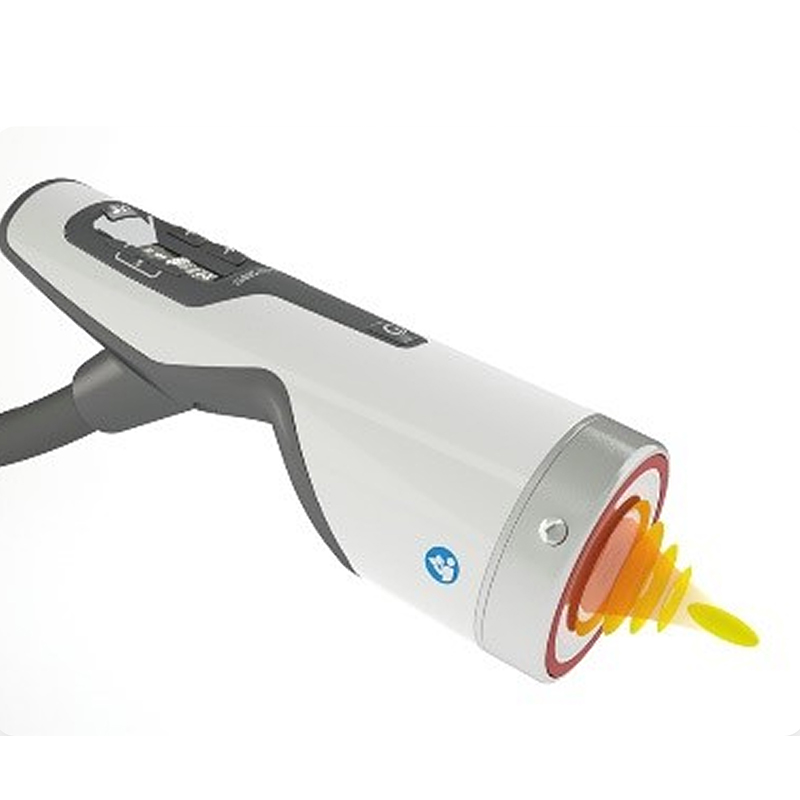
FSW uses externally applied focused acoustic waves to reach deep tissues and activate biological repair. The therapy works entirely from outside the body, delivering precise energy without interfering with surrounding systems
FSW concentrates energy at precise depths, allowing clinicians to zero in on the exact source of pain or dysfunction. This pinpoint accuracy ensures treatment is delivered exactly where it’s needed, with measurable results
FSW enhances cellular metabolism, boosts vascular regeneration, and activates mechanotransduction pathways in damaged tissues. The result: accelerated tissue repair, reduced pain, and restored function from the inside out
FSW is clinically supported by the International Society for Medical Shockwave Treatment (ISMST) and backed by hundreds of peer-reviewed studies. This therapy stimulates cellular regeneration, accelerates healing, and relieves pain through the powerful mechanism of mechanotransduction without needles, anesthesia, or surgery.
Treatments are administered using a handpiece that emits focused acoustic waves to a specific target area based on tissue depth, pathology, and patient sensitivity. Because of its precise targeting, FSW is often preferred for chronic, stubborn, or deep conditions that have not responded to conventional care.
FSW delivers high-energy acoustic pulses with millimeter precision, allowing the shockwaves to reach deep tissues such as tendons, ligaments, bones, and periosteum.
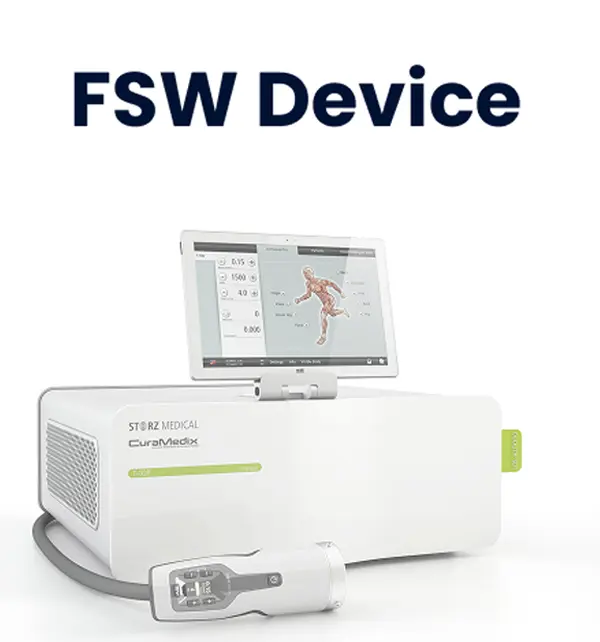


As these mechanical waves pass through the body, they trigger a series of biochemical and cellular responses through mechanotransduction, including

at deeper tissue levels, increasing blood supply to injured areas
and tissue remodeling in chronic tendon and ligament injuries
supporting bone regeneration and healing in non-unions or stress fractures
particularly in conditions like calcific shoulder tendinopathy
including reduced substance P and desensitization of nociceptors
and mitochondrial activation for improved tissue recovery
Because of its ability to concentrate energy at a selectable tissue depth, FSW is especially useful in hard-to-reach areas such as the deep rotator cuff, hamstrings, proximal hip, sacroiliac region, or chronic periosteal pain around the knee, elbow, or heel.
Not all shockwaves are the same. While both EPAT (Radial) and FSW (Focused) promote healing non-invasively, they differ in energy delivery, depth, and clinical use. The table below outlines when each is best applied.
| Feature | Standard Heat Therapies | FSW (Focus Shockwave Therapy) |
|---|---|---|
| Waveform | Radial, dispersed energy | Focused, converging energy |
| Treatment Depth | 1–4 cm (ideal for superficial structures) | 0.5–12 cm (adjustable, deep precision) |
| Energy Density | Low to moderate | High, focused, and tunable |
| Coverage Area | Broad and diffuse | Pinpoint accuracy |
| Ideal Use Cases | Myofascial trigger points, superficial tendinopathies, recovery protocols | Deep tendinopathies, bone regeneration, calcific deposits, non-unions |
| Clinical Style | General soft-tissue recovery, massage-like effect | Precision-targeted, biologically driven regenerative stimulus |
| Wave Generation | Pneumatic (air pressure) | Electromagnetic / Piezoelectric / Electrohydraulic |
Focused Shockwave Therapy (FSW / fESWT) delivers a high-intensity, precisely targeted acoustic wave that penetrates deep into musculoskeletal tissues. Unlike surface-level modalities, FSW activates cellular and vascular pathways essential for repairing structurally damaged or degenerative tissues. Its depth and energy profile make it uniquely suited to stimulate true regenerative healing in bones, tendons, cartilage, and nerves.
Documented Biological Effects of FSW:
Promotes Angiogenesis and Repair Signaling: Stimulates production of VEGF (vascular endothelial growth factor), BMPs (bone morphogenetic proteins), and nitric oxide (NO), critical mediators of blood vessel formation, bone growth, and cellular repair.
Enhances Tendon Remodeling: Activates fibroblasts and tenocytes, promoting organized collagen synthesis and improved tendon matrix integrity.
Supports Bone and Cartilage Regeneration: Triggers chondrogenic and osteogenic pathways, aiding in cartilage health and bone remodeling.
Reduces Chronic Inflammation: Inhibits pro-inflammatory cytokines like IL-6 and TNF-α, helping to break cycles of chronic pain and tissue breakdown.
Improves Oxygenation and Clearance: Enhances local circulation, increasing tissue oxygen delivery and metabolic waste removal.
Accelerates Nerve Healing: Facilitates neurogenic repair by promoting nerve regeneration and reducing peripheral sensitization linked to chronic neuropathic pain.
 Compromised Tissue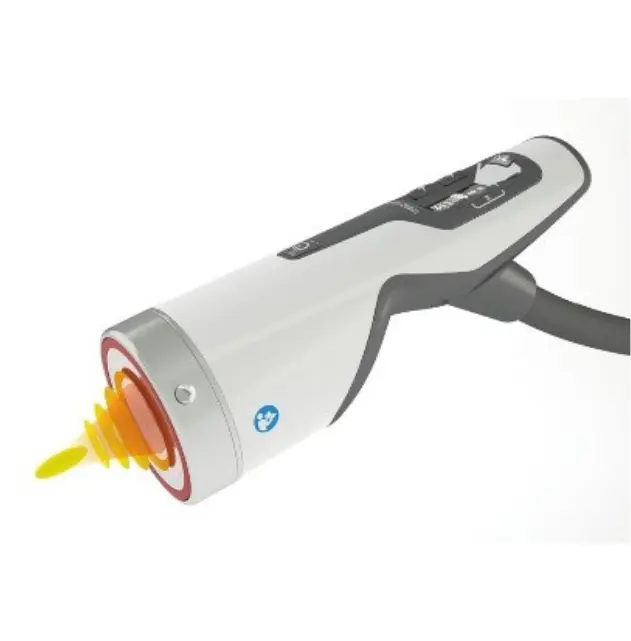
 Regenerated Tissue
Accelerates cellular metabolism and mitochondrial activation for improved tissue recovery and long-term adaptation
Reduced local nociceptor sensitivity and decreased levels of substance P and other pain-related neuropeptides
These regenerative mechanisms position Focused Shockwave Therapy as a powerful solution for conditions that require deeper tissue activation, such as tendinopathies, non-unions, or calcific lesions, especially when previous treatments have failed. FSW not only reduces symptoms but re-engages the body’s biological healing system at a structural level, offering a pathway toward true recovery.
Backed by ISMST recommendations and multiple randomized controlled trials (RCTs), Focused Shockwave Therapy (FSW / fESWT) has consistently demonstrated meaningful results in both acute and chronic musculoskeletal conditions. Its unique ability to stimulate deep tissue healing makes it a valuable tool across a wide range of complex cases.
Highly Effective for Refractory Conditions: Ideal for deep-seated tendinopathies, bone stress injuries, and cases unresponsive to traditional conservative care.
Accelerated Pain Reduction: Many patients experience significant pain relief and functional gains within just 3–5 treatment
sessions.
Structural Healing Support: Improves tendon quality, stimulates bone remodeling, and restores fascial
mobility
Minimizes Need
for Invasive Interventions: Reduces reliance on pain medications, corticosteroid injections, and surgical procedures.
Optimizes Recovery and Prevents Recurrence: Speeds up rehabilitation timelines and lowers the risk of re-injury, particularly in athletes and individuals with repetitive strain conditions.
FSW is especially valuable for persistent or complex injuries involving delayed healing, chronic inflammation, or post-surgical tissue dysfunction, offering a regenerative, non-invasive alternative where other interventions fall short.
Focused Shockwave Therapy (FSW / fESWT) is a highly targeted intervention designed to treat deep, chronic, and treatment-resistant musculoskeletal conditions. It is particularly effective when traditional conservative approaches have failed to deliver lasting relief.

Chronic plantar fasciitis, especially refractory cases
Tendinopathies & Soft Tissue Disorders
Bone & Joint Conditions
Insertional and mid-portion Achilles tendinopathy
Patellar tendinosis (“jumper’s knee”)
Calcific tendinitis of the rotator cuff
Greater trochanteric pain syndrome (gluteal tendinopathy)
Medial tibial stress syndrome (shin splints)
Chronic sacroiliac or piriformis-related pain
Non-union and delayed union fractures
Bone marrow edema (BME) and early-stage avascular necrosis (AVN)
FSW is also leveraged as a regenerative tool for athletic recovery, helping accelerate tissue healing, restore fascial glide, reduce post-exertional congestion, and support return-to-sport following overuse injuries or surgery.
In The S.H.I.V.A. Method, Focused Shockwave Therapy (FSW / fESWT) is not applied generically or based on protocolized timing; it is a regenerative catalyst delivered with precision. To achieve meaningful, tissue-level change, the energy level, intensity, depth, and timing must be calibrated with purpose. Improper use, whether too early, too deep, too superficial, or at the wrong intensity and energy, can lead to poor outcomes or no therapeutic benefit at all.
We don’t just “use” FSW; we know exactly when and how to integrate it, and we pair it synergistically with other regenerative technologies such as Class IV Laser, INDIBA, SCENAR, EMTT, Manual Therapy, or complementary forms of Shockwave. Each decision is rooted in a system-based framework designed to reactivate and recalibrate the body’s innate healing mechanisms.
Focused Shockwave Therapy (FSW) is integrated once foundational tissue balance has been restored through manual therapy or other regenerative modalities. It acts as a biological catalyst, amplifying prior interventions and accelerating recovery.
FSW amplifies fibroblast and osteoblast activity, flushes out chronic inflammatory mediators, and restores microvascular perfusion in areas like the periosteum, tendon insertions, or subchondral bone, revitalizing stagnant, poorly healing tissue.
In the final phase, FSW supports functional reintegration by reducing neuromuscular inhibition, improving fascial and tendon compliance, and preparing tissue for load-bearing, dynamic movement, and long-term adaptation.
Unlike symptomatic modalities that offer temporary relief, FSW becomes a regenerative amplifier, but only when applied with clinical precision and timing. In untrained hands, it’s just another device. Within The S.H.I.V.A. Method, it becomes a biologically timed, system-driven intervention that contributes to whole-body recalibration, sustainable recovery, and long-term resilience.
Focused Shockwave Therapy (FSW) is an excellent non-invasive treatment option for individuals dealing with persistent, treatment-resistant musculoskeletal pain. It is especially valuable when other approaches like traditional physical therapy have plateaued or failed to produce significant improvement. Ideal candidates include:


Have chronic tendon or Joint pain that has not responded to standard physical therapy
Are dealing with calcific tendinopathy, non-healing stress fractures, or post-surgical pain syndromes
Are an athlete seeking accelerated recovery from deep soft tissue or bone-related injuries
Have plateaued with manual therapy, exercise, or radial shockwave (EPAT)
Individuals hoping to avoid injections, painkillers, or surgery as part of their recovery plan.
Focused Shockwave Therapy (FSW) is an excellent non-invasive treatment option for individuals dealing with persistent, treatment-resistant musculoskeletal pain. It is especially valuable when other approaches like traditional physical therapy have plateaued or failed to produce significant improvement. Ideal candidates
Focused Shockwave Therapy (FSW) sessions are fast, precise, and tailored to reach deeper tissues that other treatments can’t. Here’s what you can expect during your visit:
Each session typically lasts 10 to 20 minutes, depending on the depth, location, and complexity of the condition being treated.
Most patients receive FSW once per week. This pacing allows time for biological signaling and tissue remodeling between sessions.
A typical treatment course involves 3 to 6 sessions. More chronic or structurally involved conditions, such as calcific tendinopathy or bone marrow edema, may require extended or staged treatment planning.
During treatment, you may feel a deep ache, pressure, or pulsing sensation. The intensity is adjustable to patient comfort and generally well tolerated.
A conductive gel is applied directly to the skin over the treatment area. In some cases, ultrasound guidance is used to enhance precision and ensure accurate energy delivery to the target tissue.
There is no downtime. While mild soreness or tenderness may occur for 24–48 hours post-treatment, patients can return immediately to daily activities, including exercise and physical therapy.
Many patients begin noticing improvements in pain, mobility, and overall function within just a few sessions, with cumulative benefits increasing over time.
EMTT is backed by rigorous scientific research and clinical studies.