Functional and neuromuscular retraining is a structured, progressive exercise approach that retrains the nervous system's ability to coordinate, sequence, and control muscle activation during movement. Rather than focusing on isolated muscle strength alone, this approach targets the quality of movement, training the brain and spinal cord to activate the right muscles, in the right order, at the right time, with the right amount of force for each specific task. It addresses the motor control deficits and faulty movement patterns that often persist after injury, surgery, chronic pain, or prolonged inactivity, even when adequate strength has returned.
The foundation of this approach rests on decades of motor control and motor learning research. Pioneering work by researchers including Hodges and Richardson demonstrated that patients with low back pain exhibit altered timing and activation of deep stabilizing muscles, and that these deficits can be retrained through specific exercise progressions. The broader field of neuromuscular training has since expanded to encompass coordination retraining, proprioceptive training, balance and postural control, dynamic stabilization, plyometric control, and functional task-specific practice across all body regions.
At Shiva Physical Therapy, functional and neuromuscular retraining is a central component of The S.H.I.V.A. Method. We use detailed movement analysis to identify specific motor control deficits and then design individualized retraining programs that progress from foundational activation and control through advanced functional and sport-specific tasks.
Functional and neuromuscular retraining works by leveraging the nervous system's capacity for neuroplasticity, the ability to reorganize neural pathways and modify motor programs in response to structured practice and feedback. When the brain and spinal cord repeatedly practice a movement pattern under controlled conditions, the neural circuits responsible for that pattern become more efficient, faster, and more automatic. This process occurs through several interacting mechanisms.

Restoration of anticipatory postural adjustments: In healthy movement, deep stabilizing muscles such as the transversus abdominis, multifidus, and rotator cuff activate milliseconds before limb movement begins. Injury and pain disrupt this anticipatory timing, leaving joints vulnerable. Motor control exercise specifically retrains this feedforward activation so that stabilizers fire before movement occurs
Correction of altered muscle recruitment patterns: Pain and injury cause the nervous system to adopt compensatory strategies, overactivating superficial global muscles while underactivating deep local stabilizers. Neuromuscular retraining reverses these patterns by selectively activating underused muscles while reducing excessive guarding and co-contraction
Improved proprioceptive processing: Joint and muscle receptors provide continuous information about body position, movement velocity, and force. Injury degrades this proprioceptive input. Targeted balance and coordination exercises restore the accuracy and speed of proprioceptive processing, improving the body's awareness of its position in space
Enhanced sensorimotor integration: The brain must rapidly integrate sensory input from vision, vestibular, and somatosensory systems to produce coordinated movement. Neuromuscular retraining challenges this integration by progressively increasing task complexity, environmental variability, and speed demands
Optimization of intermuscular coordination: Functional movement requires precise timing and force sharing between multiple muscle groups acting across multiple joints. Retraining addresses the coordination between muscles, not just the capacity of individual muscles, ensuring that the entire kinetic chain works as an integrated unit
A 2023 narrative review published in Endocrinology, Diabetes and Metabolism examined the mechanisms by which motor control exercise improves low back pain and identified changes across brain, biochemical, inflammatory, and neuromuscular domains. At the cortical level, motor control exercise has been associated with reorganization of the primary motor cortex representations of trunk muscles, reversing the cortical smudging that occurs with chronic pain. At the spinal cord level, repeated practice strengthens the synaptic connections within motor neuron pools, improving the speed and reliability of motor commands. These neuroplastic adaptations explain why neuromuscular retraining produces benefits that persist beyond the treatment period.
Functional and neuromuscular retraining differs from conventional strengthening and general exercise in several fundamental ways. These differences make it a critical bridge between passive treatment and full functional recovery, addressing the gap that often exists between having adequate strength and being able to use that strength effectively in real-world tasks.
Traditional strengthening programs focus on building force production capacity in individual muscles or muscle groups, often using machines, free weights, or resistance bands in controlled, predictable environments. While this is essential, it does not automatically transfer to improved movement quality. A patient may develop excellent quadriceps strength on a leg press machine but continue to demonstrate poor knee control during a single-leg squat, stair descent, or lateral cutting maneuver because the nervous system has not been retrained to coordinate that strength within the demands of functional movement.
Neuromuscular retraining targets the control system rather than the force-producing system. It trains the brain and spinal cord to coordinate muscles appropriately during movements that mirror real-life demands. Exercises progress from simple, slow, and stable to complex, fast, and unpredictable, systematically challenging the nervous system to develop robust motor programs that can adapt to the variable conditions of daily life and sport.
Functional and neuromuscular retraining produces a broad range of clinical benefits that extend beyond what passive treatment or isolated strengthening can achieve. These benefits are supported by systematic reviews and meta-analyses across multiple patient populations and conditions.
Improved motor control and muscle activation timing, restoring anticipatory stabilization during functional tasks
Reduced pain intensity and disability through correction of faulty movement patterns that overload sensitized tissues
Enhanced proprioception, balance, and postural control, reducing fall risk and improving confidence in movement
Improved dynamic joint stability, protecting joints during unpredictable movements and high-demand activities
Reduced injury recurrence through correction of the neuromuscular deficits that predisposed the patient to injury
Improved functional performance in daily activities, work tasks, and sport-specific demands
Decreased kinesiophobia and fear-avoidance behavior through progressive, successful movement experiences
Enhanced movement efficiency, reducing energy expenditure and fatigue during sustained activity
Sustained long-term improvements that persist after treatment ends due to neuroplastic adaptation
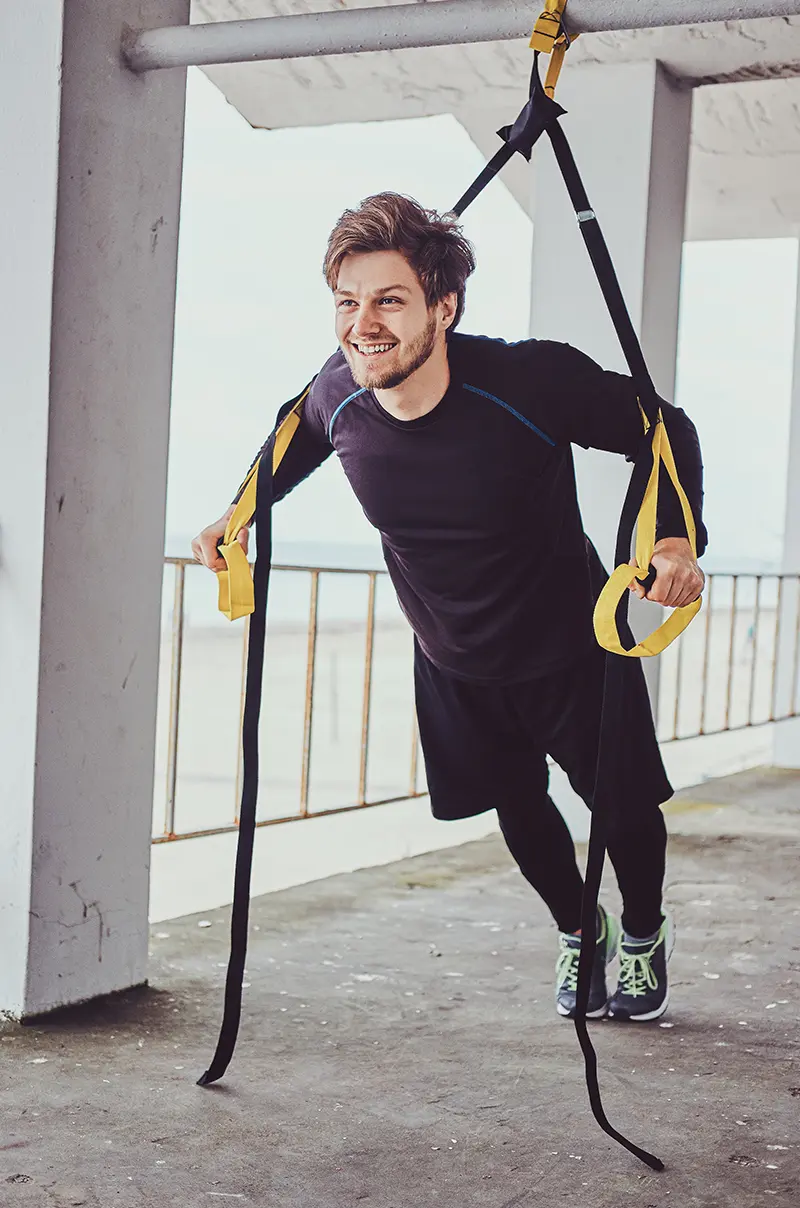
Functional and neuromuscular retraining encompasses several integrated training components. The clinician selects and combines these components based on the specific motor control deficits identified during the clinical examination and the patient's functional goals.
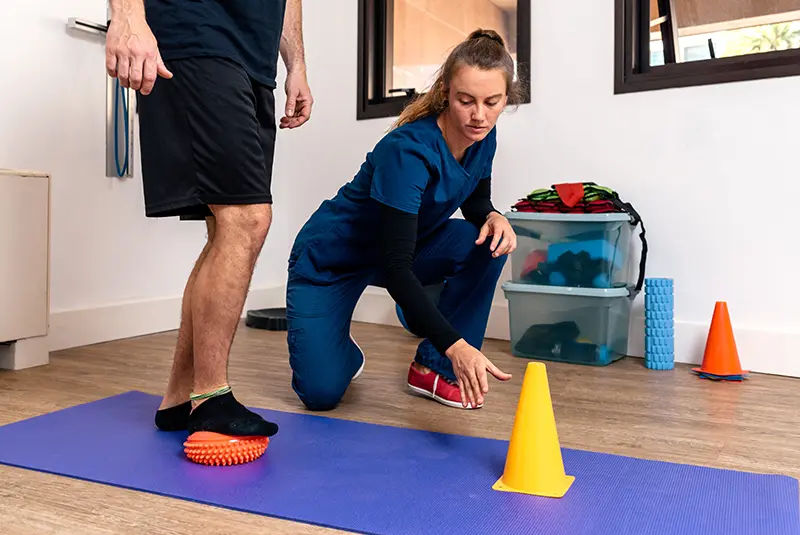
The foundational component of the program involves retraining the activation and coordination of deep stabilizing muscles. For the spine, this includes targeted activation of the transversus abdominis, lumbar multifidus, and pelvic floor muscles, progressing from isolated contraction in supported positions to maintaining stabilization during increasingly complex limb movements and functional tasks. For the shoulder, this involves retraining the rotator cuff and scapular stabilizers to provide dynamic glenohumeral and scapulothoracic control. For the lower extremity, this includes gluteal activation and hip-knee-ankle alignment training during weight-bearing activities.
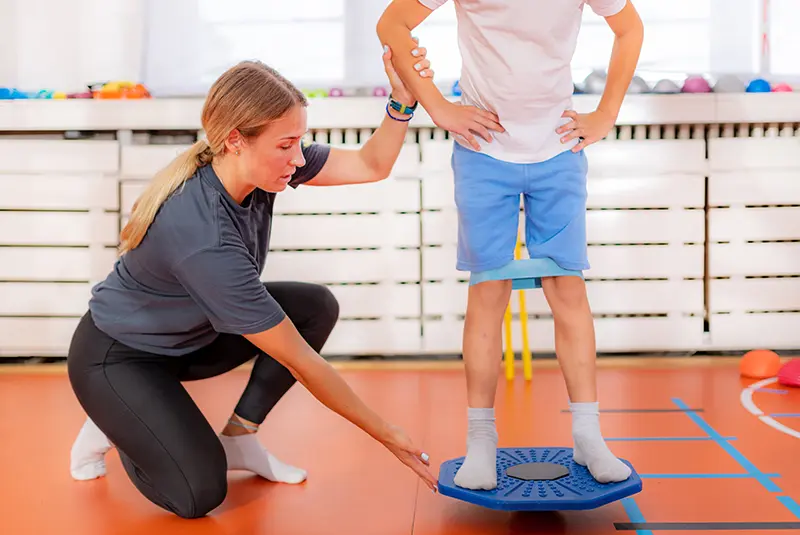
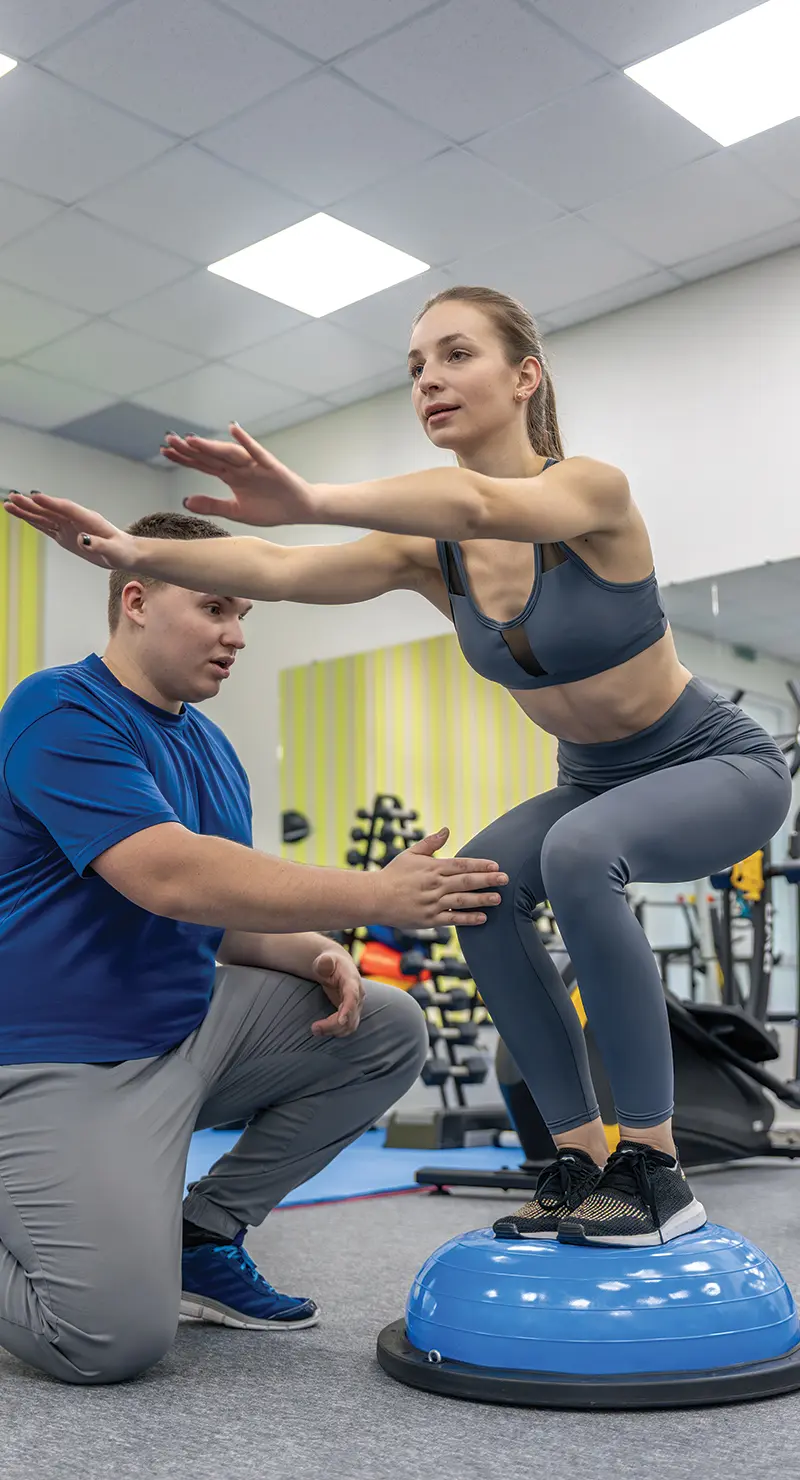
Progressive balance exercises that systematically challenge the somatosensory, visual, and vestibular systems. Training begins with stable surfaces and bilateral stance, then progresses to unstable surfaces, single-leg stance, eyes-closed conditions, and dual-task challenges that require the patient to perform cognitive or manual tasks while maintaining balance. This component retrains the speed and accuracy of proprioceptive processing and postural correction responses.
Exercises that require the patient to maintain joint stability while performing controlled movement through range. Unlike static stabilization exercises, dynamic stabilization challenges the neuromuscular system to coordinate stabilizers and prime movers simultaneously during movement. Examples include single-leg deadlifts, multi-directional lunges with perturbation, and reactive trunk control exercises.
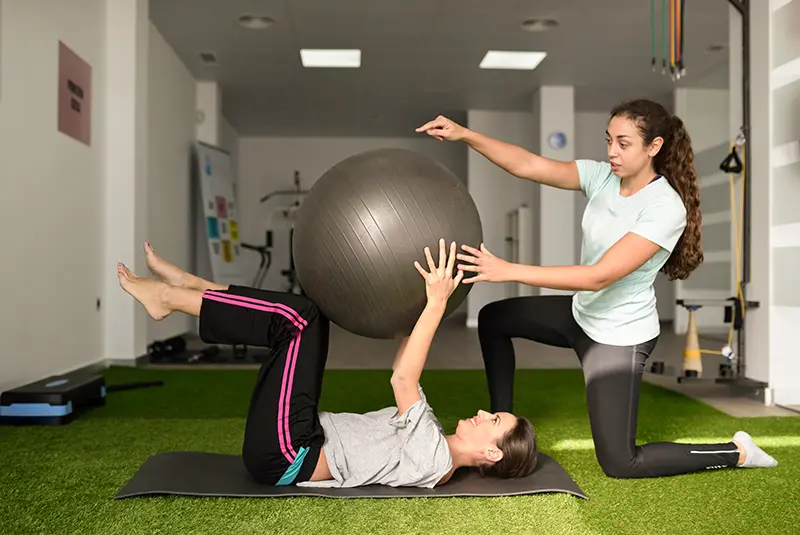
Exercises designed to improve the timing, sequencing, and force modulation of muscle activation across multiple joints during complex movements. This includes agility drills, deceleration training, change-of-direction exercises, and sport-specific movement patterns performed with a focus on movement quality rather than speed or load. External focus of attention cues, in which the patient focuses on the movement outcome rather than specific muscle activation, are used to optimize motor learning.

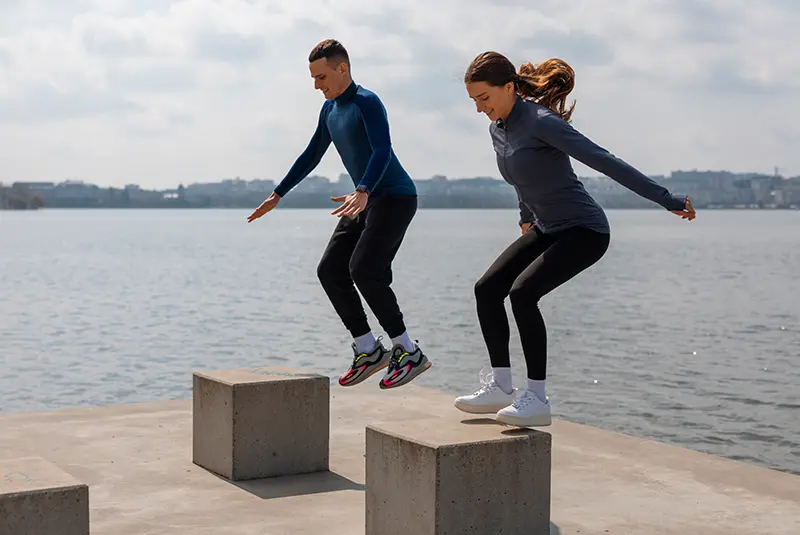
For patients progressing toward high-demand activities and sport, plyometric exercises train the stretch-shortening cycle and reactive muscle activation. Beginning with low-amplitude, controlled landing exercises and progressing to multi-directional jumps, hops, and sport-specific cutting maneuvers, this component develops the rapid force production and deceleration capacity needed for safe return to sport. Movement quality is assessed at each progression to ensure that neuromuscular control is maintained under increasing demand.

The final progression involves practicing the specific movements and activities that the patient needs to perform in their daily life, work, or sport. This may include lifting mechanics, overhead reaching patterns, stair navigation, running gait retraining, or sport-specific skills. Task-specific practice ensures that the motor control gains achieved in structured exercise transfer to real-world performance.
Functional and neuromuscular retraining is applicable across virtually all musculoskeletal and neuromotor conditions in which altered motor control, impaired coordination, or movement dysfunction contributes to the patient's pain, disability, or injury risk. Conditions commonly treated include:


Chronic nonspecific low back pain with altered trunk motor control strategies
Post-surgical rehabilitation following ACL reconstruction, meniscus repair, rotator cuff repair, or spinal surgery
Shoulder instability and impingement with impaired scapular and rotator cuff coordination
Patellofemoral pain syndrome with poor hip-knee-ankle alignment during functional activities
Chronic ankle instability following recurrent lateral ankle sprains
Cervical and thoracic spine disorders with impaired deep neck flexor or scapular motor control
ACL injury prevention in high-risk athletic populations
Hip dysfunction with impaired gluteal activation and lumbopelvic control
Post-concussion rehabilitation involving vestibular and balance retraining
Age-related balance and fall prevention in older adults
Return-to-sport reconditioning after prolonged absence from athletic activity
Work-related musculoskeletal disorders requiring task-specific movement retraining
Within The S.H.I.V.A. Method, functional and neuromuscular retraining serves as the primary bridge between passive treatment and independent function. Manual therapy techniques such as joint mobilization, soft tissue work, and neurodynamic mobilization create windows of reduced pain and improved tissue mobility. Neuromuscular retraining then fills those windows with active motor learning, ensuring that the gains achieved through hands-on treatment are consolidated into lasting changes in how the patient moves.
The integration follows a structured clinical reasoning process:
The goal is not permanent dependence on clinical treatment but the development of robust, resilient motor programs that allow the patient to manage their condition, perform their daily activities, and pursue their physical goals independently and confidently.
Understanding the process and timeline of neuromuscular retraining can help you engage more effectively in your rehabilitation and set realistic expectations for your recovery.
Your clinician will guide you through a structured series of exercises that progress from foundational activation and control exercises to more complex functional tasks.
Neuromuscular retraining exercises should not produce significant pain. You may notice a sense of muscular effort, mild fatigue, and mental engagement as you learn new movement patterns.
Sessions are typically scheduled 1 to 2 times per week. Home exercise programs are prescribed for daily practice, as motor learning requires frequent repetition to consolidate new neural pathways.
Functional and neuromuscular retraining is appropriate for virtually any patient who demonstrates impaired movement quality, altered motor control, or a gap between their available strength and their functional performance. Because the program is individually graded and progressively structured, it can be adapted for patients across the spectrum of age, fitness, and functional demand.
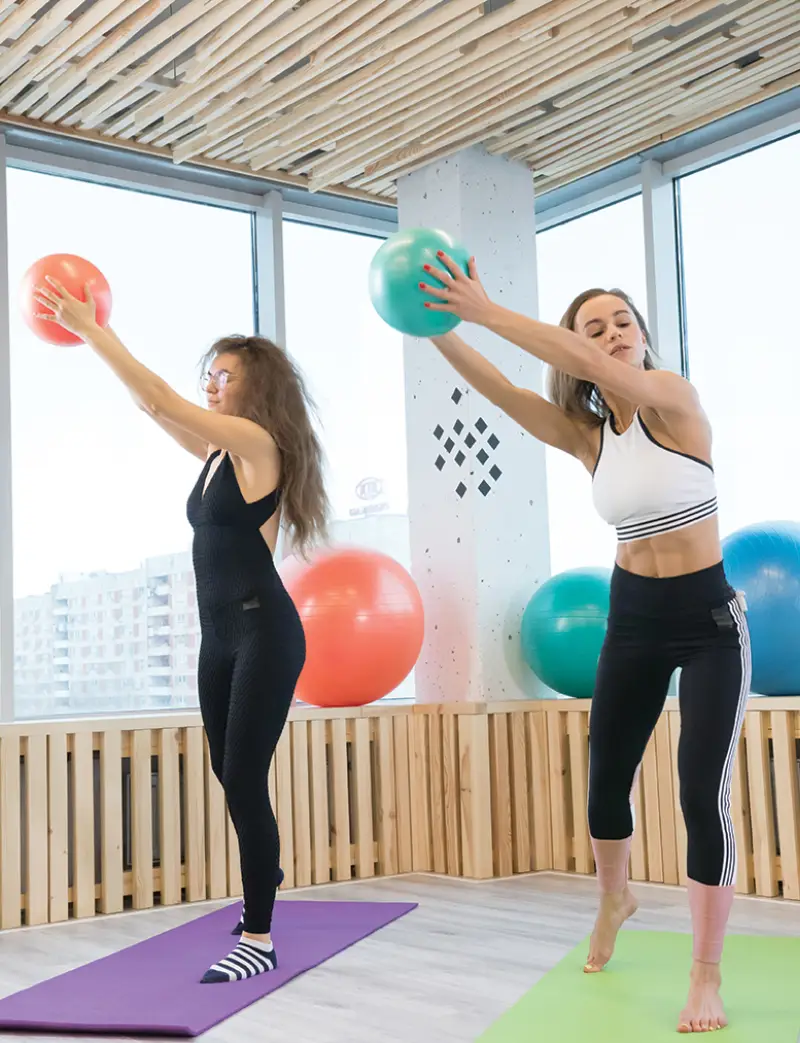
Neuromuscular retraining may be particularly appropriate for individuals who:
Have recovered adequate range of motion and strength but still experience pain or difficulty with functional activities
Demonstrate visible movement compensations such as trunk shift, Trendelenburg gait, dynamic knee valgus, or scapular winging during functional tasks
Have had recurrent injuries to the same body region, suggesting underlying motor control deficits that predispose them to re-injury
Are returning to sport or high-demand activity after surgery or prolonged absence
Have chronic pain conditions in which movement dysfunction and fear-avoidance behavior contribute to ongoing disability
Are older adults with impaired balance and fall risk requiring comprehensive neuromuscular conditioning
Are young athletes in high-risk sports who would benefit from injury prevention neuromuscular training
Below are answers to some of the most common questions patients have about functional and neuromuscular retraining, including how it differs from other exercise approaches and what the evidence supports.
Traditional physical therapy exercises often focus on building strength, flexibility, and endurance in individual muscles or muscle groups. Neuromuscular retraining goes further by targeting the quality of movement, specifically how the brain and spinal cord coordinate muscle activation during functional tasks. The emphasis is on retraining the nervous system's motor programs, not just building stronger muscles.
Motor control exercise for nonspecific low back pain: a Cochrane review.
Read Full StudyEffects of motor control exercises in patients with chronic nonspecific low back pain: a systematic review and meta-analysis.
Read Full StudySustainability effects of motor control stabilisation exercises on pain and function in chronic nonspecific low back pain patients: a systematic review with meta-analysis and meta-regression.
Read Full StudyAnalysis of motor control in patients with low back pain: a key to personalized care?
Read Full StudyExercise intervention for patients with chronic low back pain: a systematic review and network meta-analysis.
Read Full StudyThe effects of injury prevention programs on the biomechanics of landing tasks: a systematic review with meta-analysis.
Read Full StudyNeuromuscular training for preventing knee injuries in female team athletes: a meta-analysis.
Read Full StudyNeuromuscular training and motor control in youth athletes: a meta-analysis.
Read Full StudyDose-response relationship of neuromuscular training for injury prevention in youth athletes: a meta-analysis.
Read Full Study