




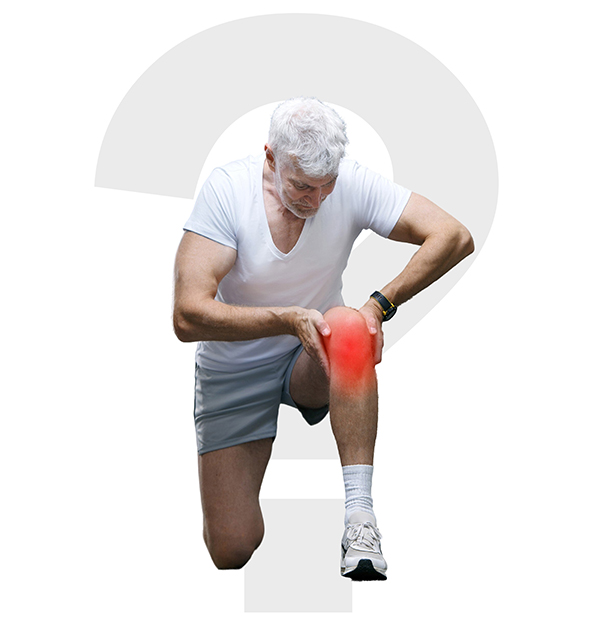
Knee pain affects people of all activity levels, including caregivers, walkers, runners, and lifters. It can feel like a dull ache near the kneecap, sharp pain during stairs or squats, catching or locking inside the joint, swelling, stiffness after sitting, or instability while pivoting or stepping unevenly. Some cuff injuries happen suddenly from falls or bad landings, while others develop slowly over months or years due to load imbalance, cartilage stress, or compensation patterns that were never fully recalibrated early on.
Knee pain is rarely caused by one structure alone. It involves the cervical chain influence downward, fascia tension, nerve sensitivity, ligament fiber behavior, pelvic load coordination, and gait-load mechanics that the knee inherits with every movement or step. This explains why similar scan findings may exist in people who feel no pain, while others remain in pain because the stress loop around the joint never resets.
Most traditional care works on one layer at a time, resting, stretching, mobilizing, manual therapy, or routine strengthening, which can help temporarily but often misses the deeper factors that block lasting recovery, like load imbalance, tissue and joint dysfunction, nerve over-alert signaling, fascia restrictions, and biomechanical dysfunctions. True recovery improves when mechanics, tissue healing, circulation, nerve calmness, fascia glide, movement confidence, and muscle-timing restore together as one connected system, not through isolated or forced steps.

At Shiva Physical Therapy, the S.H.I.V.A. Method offers a unified, biology-paced recovery pathway that helps the body shift out of long-held protection mode, reset stress feedback loops, and rebuild stronger, balanced, and more confident movement naturally and sustainably.
At Shiva Physical Therapy, we support recovery for a wide range of knee-related pain and movement dysfunctions, including both common diagnoses and complex or under-recognized conditions.
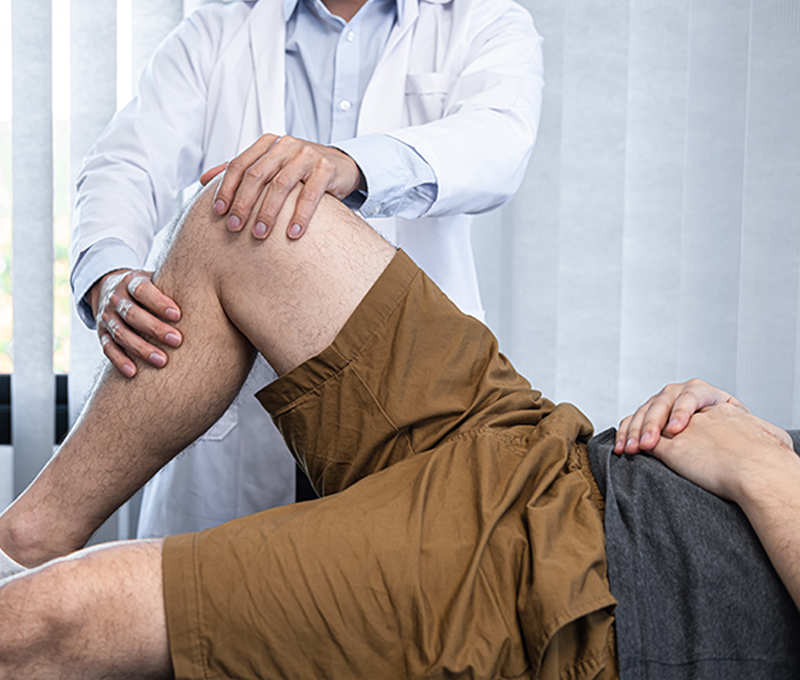
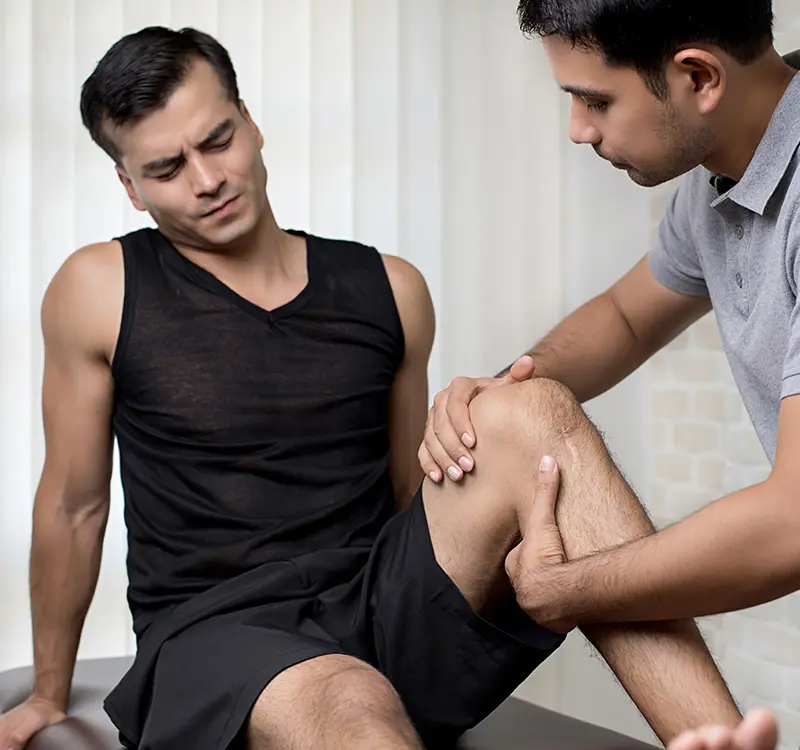
Knee symptoms are rarely isolated. If you’ve felt stuck in a cycle of relief and setback, it may be time for a smarter knee system reset where tissue behavior, load sharing, nerve response, joint glide, and movement confidence progress together, not separately.
If conventional shoulder care truly worked, why are so many people still avoiding overhead reach, lifting, turning the arm behind the back, or side-lying sleep because of persistent shoulder pain?
Short-Term Fixes
If rest, stretching, bracing, TENS / IFC , massage, dry needling, manual therapy, or standard strengthening were enough, why does pain keep returning when you increase activity, sit too long, sleep on that side, or try to lift again?
Why Pain Differs
If scan findings show similar cuff or labral issues, why can one person raise their arm pain-free, while another struggles to lift or sleep comfortably?
Load Stress Unchanged
Are cortisone injections or surgery truly repairing tissue biology, or mostly suppressing pain temporarily while leaving the load stress and inflammation behavior unchanged underneath?
Root-Cause Correction
Can any recovery plan that doesn’t restore joint tracking, normalize shoulder-blade timing, rebalance spine–pelvis–rib–shoulder load symmetry, calm hypersensitive nerves, and retrain full kinetic-chain recruitment create lasting recovery?
Knee pain isn’t just a “weak quad,” “tight IT band,” or “arthritic joint.” It’s a whole-system issue involving the femur and tibia alignment, patellofemoral tracking, cartilage and meniscus health, surrounding ligaments and tendons, hip and pelvic control, foot mechanics, fascia lines, and neuromuscular coordination. When one component becomes overloaded or restricted, it disrupts the entire chain, creating a loop of stiffness, inflammation, nerve sensitivity, swelling, and guarded movement.
Most traditional approaches focus on one element at a time: stretch what feels tight, strengthen the quads, wear a brace, Dry needling, use manual therapy around the knee joint, or rest when it flares. While these may offer short-term relief, they often fail to resolve the underlying barriers to healing: abnormal joint pressure, tissue dysfunction, imbalanced hip and pelvic load, patellar tracking stress, IT band or fascia tension, altered gait, weak shock absorption, and protective neuromuscular patterns.
Modern regenerative science shows that real knee recovery requires more than symptom control. It requires:

Supporting cellular repair and tendon/cartilage health
Recalibrating neuromuscular timing and hip–knee–foot control
Balancing load from spine → pelvis → hip → knee → ankle → foot
Calming sensitized nerves and restoring smooth joint mechanics
By supporting the painful knee with regenerative care and also considering key influences from the hip, pelvis, lumbar spine, foot mechanics, fascial tension, and movement coordination, we guide recovery more naturally, reducing reliance on medications, injections, or surgical pathways whenever possible.
At Shiva Physical Therapy, we recognize that traditional treatments play an important role in knee care. However, many patients need more than symptom management to reach durable, high-function recovery. The S.H.I.V.A. Method was built as an additional, regenerative care framework that complements, not replaces, traditional treatment. It adds deeper, more precise, and more system-based support to restore tissue health, optimize hip–knee–foot biomechanics, reduce nerve irritation, and rebuild efficient, confident movement.
 Focuses on the painful knee joint or “weak quads” in isolation
Relies on rest, quad strengthening, generic stretches, heat/ice, massage, dry needling, cupping, manual therapy, taping, braces, or Neuromuscular stimulation,etc.
Pain relief often depends on NSAIDs, muscle relaxers, or steroid/gel injections
Exercises follow standard protocols (“knee strengthening,” “VMO activation,” “IT band stretching”)
Progress is often time-based, not biology-based; flares are common with activity spikes
Addresses muscle strength without fully correcting hip alignment, gait, or kinetic-chain balance
Best for short-term symptom relief or basic conditioning
Focuses on the painful knee joint or “weak quads” in isolation
Relies on rest, quad strengthening, generic stretches, heat/ice, massage, dry needling, cupping, manual therapy, taping, braces, or Neuromuscular stimulation,etc.
Pain relief often depends on NSAIDs, muscle relaxers, or steroid/gel injections
Exercises follow standard protocols (“knee strengthening,” “VMO activation,” “IT band stretching”)
Progress is often time-based, not biology-based; flares are common with activity spikes
Addresses muscle strength without fully correcting hip alignment, gait, or kinetic-chain balance
Best for short-term symptom relief or basic conditioning
 Evaluates the entire hip–pelvis–knee–ankle–foot chain, including joint mechanics, cartilage/meniscus load, tissue injury , tendon health, fascia, nerves, and gait
Enhances care with precision regenerative modalities and non-invasive neuromodulation that improve circulation, nerve behavior, fascia health, and tissue repair
Reduces dependence on medications or repeated injections by activating natural regenerative and neuromodulatory mechanisms
Plans are fully personalized to your key pain drivers: patellofemoral tracking, arthritis load, meniscus stress, tendon irritation, ligament laxity, or gait overload
Uses a phased regenerative framework that guides you from pain control → mobility → stability → load tolerance → full functional activation
Rebuilds movement precision, hip and core integration, foot mechanics, and knee-centric load sharing across the entire chain
Ideal for chronic, recurring, or complex knee pain where deeper system-level recalibration and regeneration are needed
Evaluates the entire hip–pelvis–knee–ankle–foot chain, including joint mechanics, cartilage/meniscus load, tissue injury , tendon health, fascia, nerves, and gait
Enhances care with precision regenerative modalities and non-invasive neuromodulation that improve circulation, nerve behavior, fascia health, and tissue repair
Reduces dependence on medications or repeated injections by activating natural regenerative and neuromodulatory mechanisms
Plans are fully personalized to your key pain drivers: patellofemoral tracking, arthritis load, meniscus stress, tendon irritation, ligament laxity, or gait overload
Uses a phased regenerative framework that guides you from pain control → mobility → stability → load tolerance → full functional activation
Rebuilds movement precision, hip and core integration, foot mechanics, and knee-centric load sharing across the entire chain
Ideal for chronic, recurring, or complex knee pain where deeper system-level recalibration and regeneration are needed

We don’t just try to “loosen your knee” or “strengthen your quads” and hope the pain goes away. We restore the systems that support knee health, tissue healing, load distribution, joint mechanics, tendon capacity, fascia behavior, nerve calmness, and coordinated movement, so your knee can do its job with less stress and more resilience.
Every plan is individualized and matched to your biology, your triggers, and your phase of healing.
Instead of generic routines, we build a phased plan that matches your sensitivity, flare patterns, and lifestyle demands.

Choosing Shiva Physical Therapy means choosing a smarter, regenerative path for knee pain, not just a temporary reduction in symptoms.
When you begin your recovery journey with us, you can expect:
It’s a regenerative, system-based recovery model designed to help your knees heal naturally, intelligently, and sustainably from within.

Call Shiva Physical Therapy today to get clear answers, a personalized plan, and a regenerative path forward—without guesswork, endless “rest,” or quick-fix cycles.
 Contact Us Today
 Same-day Appointment
 No referral needed