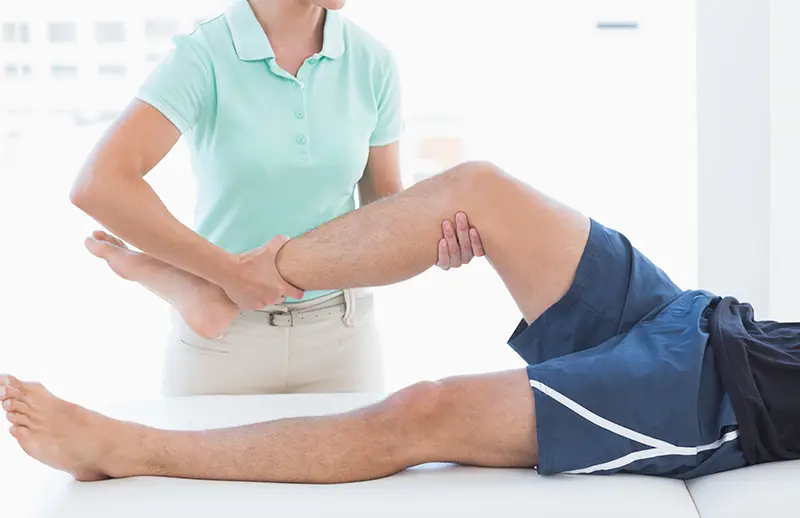
Muscle energy techniques (MET) are a class of manual therapy in which the patient actively contracts specific muscles against a precisely controlled counterforce provided by the clinician. Developed in 1948 by Fred Mitchell, Sr., D.O., MET is classified as a direct, active technique, meaning the clinician engages the restrictive barrier of a joint or muscle and the patient participates in the treatment through controlled voluntary effort. Unlike passive manual therapies where the clinician does all the work, MET requires the patient's active neuromuscular engagement, making it one of the most collaborative hands-on interventions in physical therapy.
MET uses gentle, submaximal isometric contractions, typically at 20 to 25 percent of maximum effort, held for 5 to 10 seconds, followed by a brief relaxation phase during which the clinician moves the tissue to a new barrier. This cycle is repeated 3 to 5 times. The technique exploits well-established neurophysiological reflexes to achieve muscle relaxation, increased range of motion, reduced pain, and improved joint function without the application of high-velocity forces.
At Shiva Physical Therapy, MET is applied within a comprehensive clinical reasoning framework as part of The S.H.I.V.A. Method. It is selected when clinical examination identifies muscular hypertonicity, joint hypomobility related to muscular restriction, or positional dysfunction that can be corrected through active patient participation.
Muscle energy techniques work through two primary neurophysiological mechanisms that produce reflexive muscle relaxation and allow increased range of motion:
The most commonly used MET approach. The clinician positions the restricted muscle at its barrier, then asks the patient to contract that same muscle (the agonist) against resistance. During the isometric contraction, tension builds in the muscle-tendon unit, activating Golgi tendon organs. These proprioceptors detect increasing tension and trigger a reflexive inhibition of the contracting muscle through Ib afferent fibers. Following the contraction, the muscle enters a brief refractory period of reduced tone, during which the clinician passively stretches the muscle to a new barrier. This process resets muscle spindle activity and the resting length of the muscle.

In this variation, the patient contracts the muscle opposite (the antagonist) to the restricted muscle. When the antagonist contracts, the agonist is reflexively inhibited through spinal cord-mediated reciprocal inhibition pathways, allowing it to relax and be passively lengthened. This approach is particularly useful when the restricted muscle is acutely painful and direct contraction would provoke symptoms.
Additional neurophysiological effects include activation of joint mechanoreceptors during the contraction, improved local blood flow and lymphatic drainage in the treated region, reduction in central sensitization through repetitive afferent input to the spinal cord, and fascial lengthening through sustained tension applied to connective tissue during the contraction-relaxation cycle. These combined mechanisms explain why MET often produces immediate, measurable improvements in range of motion and reductions in pain within a single treatment session.
MET is fundamentally different from passive stretching, joint mobilization, and manipulation because the patient provides the therapeutic force. This active participation engages the neuromuscular system in a way that passive techniques cannot replicate, producing reflexive changes in muscle tone through Golgi tendon organ and muscle spindle pathways rather than simply mechanically elongating tissue. The submaximal isometric contraction is precisely controlled in direction, intensity, and duration, allowing the clinician to target specific muscles and movement restrictions with a level of precision that general stretching does not achieve. Because MET uses gentle forces directed by the patient's own effort, it is well-tolerated even by patients who cannot tolerate high-velocity manipulation or aggressive stretching, making it one of the safest and most adaptable manual therapy techniques available.


Immediate improvement in restricted range of motion
Reduction in muscular hypertonicity and protective guarding
Decreased pain at the treated region
Improved joint mobility when restriction is primarily muscular
Restoration of normal muscle resting length
Enhanced proprioception and neuromuscular control
Improved tolerance of functional movement and exercise
Correction of positional or alignment dysfunction related to muscular imbalance

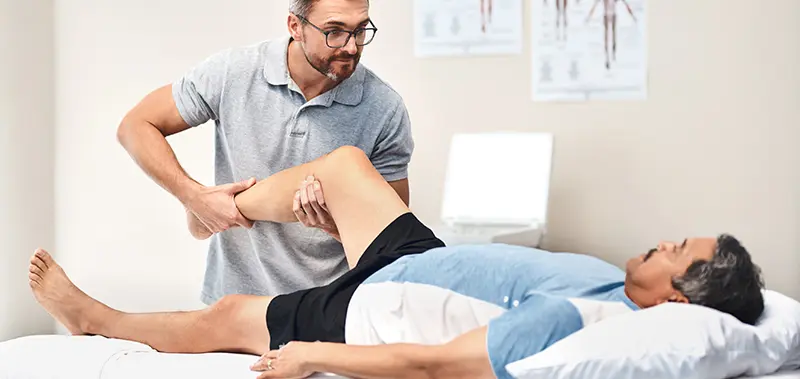
The patient contracts the restricted muscle at submaximal effort against the clinician's resistance, followed by relaxation and passive stretch to a new barrier. The most widely used MET approach, effective for muscular hypertonicity, shortened muscles, and joint restrictions caused by muscular guarding.
The patient contracts the antagonist muscle while the clinician stretches the restricted agonist. Preferred when the target muscle is acutely painful or when direct contraction of the restricted muscle is not tolerated. Uses the spinal cord's reciprocal inhibition reflex to achieve relaxation.

A more intensive variation in which the patient contracts the restricted muscle at maximal effort for 5 to 10 seconds, followed by complete relaxation and a rapid stretch to a new barrier. Used for chronic muscular shortening that has not responded to standard PIR.
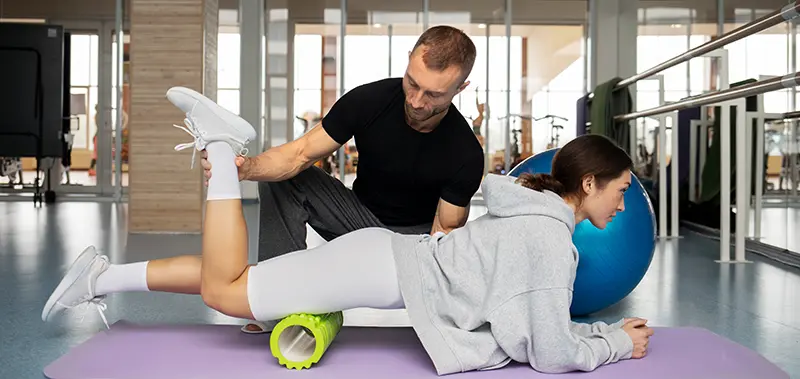
The clinician overcomes the patient's isometric contraction, creating an eccentric (lengthening) contraction of the restricted muscle. Used to address fibrotic changes within muscle tissue and to break adhesions that limit normal muscle extensibility.
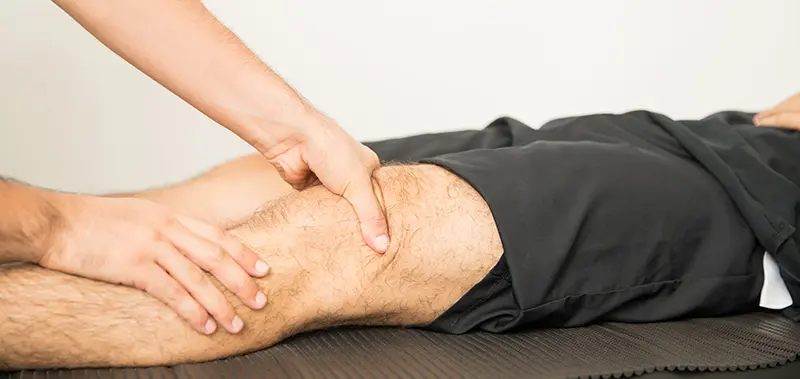
The patient's muscle contraction is directed to mobilize a restricted joint by using the muscle's force to move the joint through its available range. Particularly effective for sacroiliac joint dysfunction and spinal segmental restrictions where muscular forces can directly influence joint position.


Nonspecific low back pain with muscular hypertonicity or guarding
Mechanical neck pain and cervicogenic headache
Sacroiliac joint dysfunction
Piriformis syndrome
Hamstring, hip flexor, and quadriceps tightness restricting functional movement
Thoracic spine stiffness with associated muscular restriction
Shoulder restriction related to muscular shortening or trigger points
Myofascial trigger points in the upper trapezius, levator scapulae, and paraspinal muscles
Rib dysfunction with associated intercostal or accessory respiratory muscle restriction
Postural dysfunction related to chronic muscular imbalance
Within The S.H.I.V.A. Method, MET is not applied as a standalone stretching technique. It is selected based on clinical examination findings and integrated within a comprehensive treatment plan that addresses the underlying cause of the muscular restriction.
MET is considered when:
MET creates a window of improved muscle length, reduced tone, and normalized joint mechanics. This window is then leveraged through targeted strengthening, neuromuscular training, and functional movement restoration. The active nature of the technique also serves an educational purpose, helping the patient understand the relationship between muscular control and their symptoms, which supports long-term self-management.
Each MET application typically takes 3 to 5 minutes per muscle or joint region within a full treatment session. Multiple regions may be treated in a single visit.
Most patients notice meaningful improvement within 3 to 6 sessions. MET is progressively reduced as the patient gains the ability to maintain range of motion and muscle balance through home exercise.
It is common to feel immediate improvement in flexibility and ease of movement. Some patients experience mild soreness in the treated muscles for 12 to 24 hours, similar to the feeling after gentle stretching.
MET may be appropriate for individuals who:

Have restricted range of motion related to muscular tightness, shortening, or hypertonicity
Present with joint dysfunction where muscular restriction is a primary contributing factor
Experience chronic muscular tension patterns contributing to pain or postural dysfunction
Cannot tolerate high-velocity manipulation or aggressive passive techniques
Have sacroiliac joint dysfunction with associated pelvic muscular imbalance
Present with myofascial trigger points that respond to active neuromuscular intervention
Prefer an active, collaborative approach to manual therapy treatment
MET is contraindicated in the presence of acute fracture or dislocation, severe osteoporosis at the treatment site, active joint infection, significant tissue damage to ligaments, tendons, or muscles that has not reached sufficient stability, and centrally mediated muscle spasm that will not respond to peripheral neuromuscular input. Caution is warranted in areas of joint hypermobility, where the goal should be neuromuscular control rather than further lengthening. The patient must be cooperative and able to follow instructions for the technique to be effective.
MET is a gentle technique. You will be asked to push against the clinician's hand with light effort in a specific direction for about 5 to 10 seconds, then relax while the clinician moves the area to a new position. It should not be painful. Most patients describe it as comfortable and find the active participation helpful for understanding their body mechanics.
Muscle energy technique to reduce pain and disability in cases of non-specific neck pain: a systematic review and meta-analysis of randomized controlled trials.
Read Full StudyThe efficacy of muscle energy techniques in symptomatic and asymptomatic subjects: a systematic review.
Read Full StudyEffectiveness of muscle energy technique on the range of motion, flexibility, and function in musculoskeletal disorders: systematic review and meta-analysis.
Read Full StudyEffectiveness of muscle energy technique in patients with nonspecific low back pain: a systematic review with meta-analysis.
European Journal of Physical and Rehabilitation Medicine, 58(6), 827-837.
Effectiveness of muscle energy technique on pain intensity and disability in chronic low back patients: a systematic review.
Read Full StudyMuscle energy technique for non-specific low-back pain.
Read Full StudyProprioceptive neuromuscular facilitation stretching: mechanisms and clinical implications.
Sports Medicine, 36(11), 929-939.
Comparative efficacy of quadratus lumborum muscle energy technique with gluteus medius strengthening versus gluteus medius strengthening alone in sacroiliac joint dysfunction: a randomized controlled trial.
Read Full StudyShort-term effect of muscle energy technique and mechanical diagnosis and therapy in sacroiliac joint dysfunction: a pilot randomized clinical trial.
Journal of Manual and Manipulative Therapy, 17(1), E14-E18.