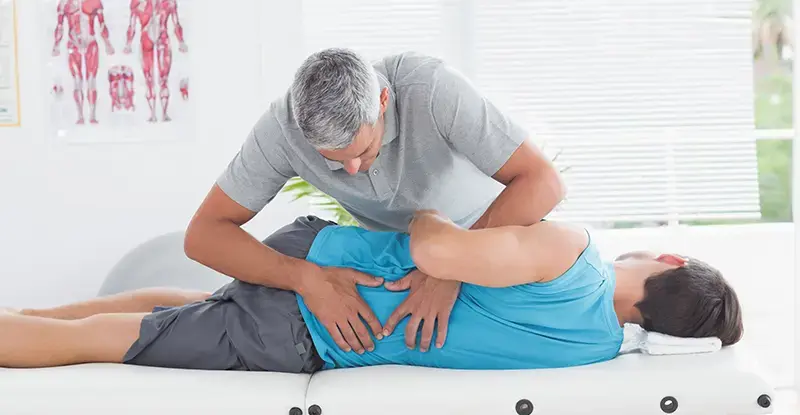
Orthopedic manual therapy (OMT) is a specialized area of physical therapy that uses skilled, hands-on techniques to evaluate and treat musculoskeletal pain and movement dysfunction. It is not a single technique but rather a comprehensive clinical framework that integrates joint mobilization, joint manipulation, soft tissue mobilization, neurodynamic techniques, and muscle energy techniques within a structured process of clinical reasoning, differential diagnosis, and individualized treatment planning.
What distinguishes orthopedic manual therapy from general hands-on treatment is the depth of the clinical examination process. The manual therapist performs detailed biomechanical, neurological, and functional assessments to identify the specific tissue, joint, or neural structure contributing to the patient's symptoms. Treatment is then directed precisely at the identified source, using the manual technique best suited to address the underlying impairment. The hands serve simultaneously as the primary diagnostic and therapeutic instrument.
At Shiva Physical Therapy, orthopedic manual therapy forms the clinical backbone of The S.H.I.V.A. Method. We apply an advanced manual therapy framework that draws from multiple evidence-based systems, including the Maitland, Kaltenborn-Evjenth, Mulligan, and osteopathic traditions, integrating them within a contemporary understanding of pain neuroscience, tissue biology, and neurophysiology.
The clinical effects of orthopedic manual therapy result from a combination of biomechanical, neurophysiological, and psychosocial mechanisms. The comprehensive model proposed by Bialosky and colleagues, first published in 2009 and updated in 2018 in the Journal of Orthopaedic and Sports Physical Therapy, provides the most widely accepted framework for understanding these mechanisms:

Restoration of accessory joint motion at hypomobile segments through graded oscillatory or sustained forces
Reduction in segmental spinal and peripheral joint stiffness
Improvement in tissue extensibility and fascial gliding through directed soft tissue forces
Correction of positional faults through mobilization with movement techniques
Stimulation of joint, muscle, and cutaneous mechanoreceptors that activates segmental inhibitory interneurons and produces reflexive muscle relaxation and reduced pain sensitivity
Activation of descending pain inhibitory pathways from the periaqueductal gray (PAG) and rostral ventromedial medulla (RVM), producing regional and widespread hypoalgesia
Reduction in temporal summation of pain (wind-up) at the spinal cord level, decreasing central sensitization
Autonomic nervous system modulation, including changes in sympathetic activity, skin conductance, and regional blood flow
Improved cortical sensorimotor processing, enhancing the brain's ability to accurately perceive and control movement
Orthopedic manual therapy is fundamentally a clinical reasoning process, not a menu of techniques applied to diagnoses. The manual therapist does not simply treat a condition; they identify the specific impairment driving the patient's pain and movement limitation through systematic examination, then select the precise manual intervention that matches the tissue, the direction of restriction, the stage of pathology, and the patient's pain presentation. It also means that manual therapy is continuously reassessed and modified based on the patient's response, session by session and even within a single treatment.
Reduction in musculoskeletal pain intensity
Improved joint range of motion and accessory joint mobility
Decreased muscle guarding, spasm, and protective tension
Improved functional mobility and ease of daily movement
Reduction in referred pain patterns and radiating symptoms
Decreased pain sensitivity and central sensitization
Enhanced proprioception and neuromuscular control
Improved tolerance of therapeutic exercise and progressive loading
Greater confidence in movement and reduced kinesiophobia

Clinical practice guidelines across multiple international bodies recommend manual therapy combined with exercise as a first-line intervention for low back pain, neck pain, and thoracic spine disorders.
The orthopedic manual therapy toolbox includes a range of hands-on techniques, each designed to address a specific type of tissue or joint impairment.
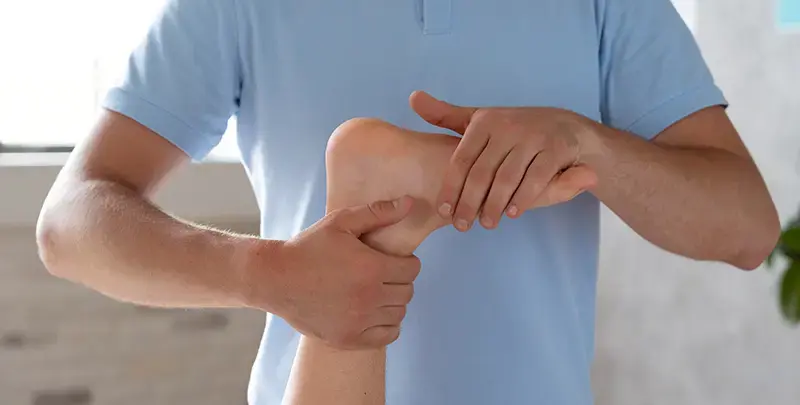
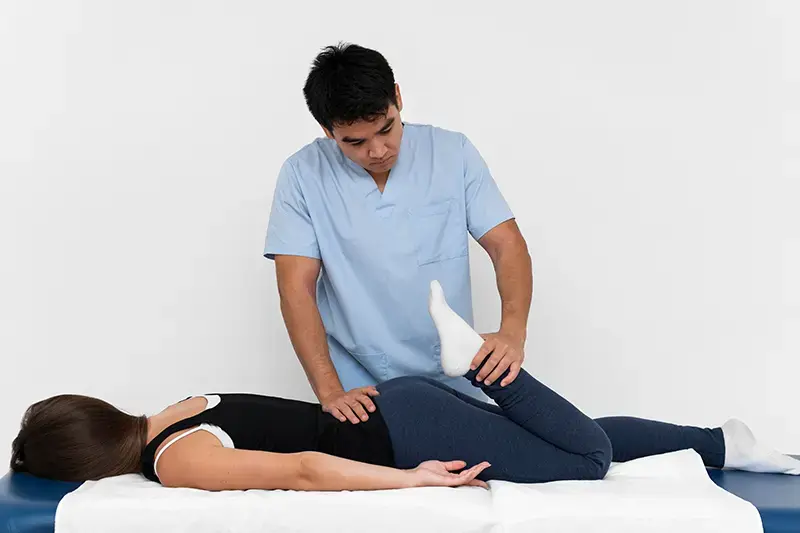
Graded oscillatory or sustained passive movements applied to a joint's accessory motion (the small gliding, rolling, and spinning movements that occur between joint surfaces during normal motion). Classified by amplitude and position within range (Maitland Grades I through IV), mobilization restores normal arthrokinematics, reduces pain, and improves joint nutrition. Applied to both spinal and peripheral joints.
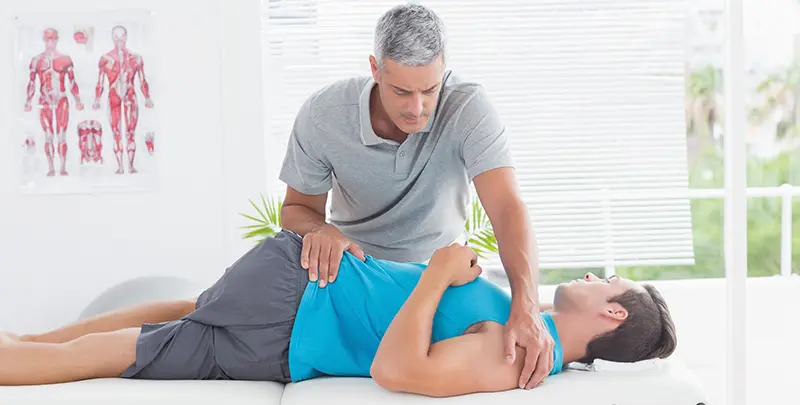
A high-velocity, low-amplitude thrust applied at the end range of a joint's available motion. Produces rapid neurophysiological effects including reflexive muscle inhibition, descending pain modulation, and immediate improvements in range of motion. Applied when clinical examination identifies segmental hypomobility and when rapid restoration of joint mechanics is indicated.

A technique developed by Brian Mulligan in which the clinician applies a sustained accessory glide to a joint while the patient performs the previously painful or restricted active movement. When the correct glide direction corrects the positional fault, the patient's movement becomes immediately pain-free and full range. Used extensively for peripheral joint conditions including lateral epicondylalgia, ankle sprains, and shoulder restrictions.
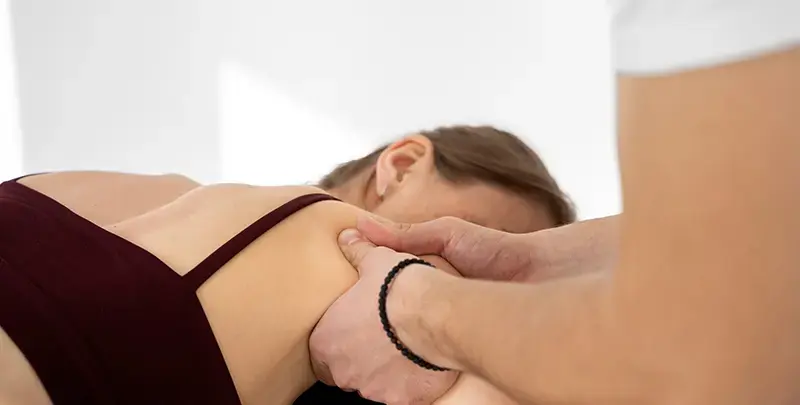
Directed manual forces applied to muscle, fascia, tendon, and ligament to address myofascial restriction, adhesion, and altered tissue compliance. Includes specific techniques such as instrument-assisted soft tissue mobilization, fascial manipulation, myofascial release, and targeted deep tissue work. Selected based on the tissue type, depth, and direction of restriction identified during examination.

Techniques that address the mechanical and physiological function of the peripheral and central nervous system. Neural tissue requires the ability to glide, elongate, and compress during normal movement. When neural mobility is restricted by adhesion, inflammation, or mechanical compression, neurodynamic techniques restore normal nerve gliding and reduce neural mechanosensitivity. Applied to conditions such as carpal tunnel syndrome, sciatica, thoracic outlet syndrome, and radiculopathy.
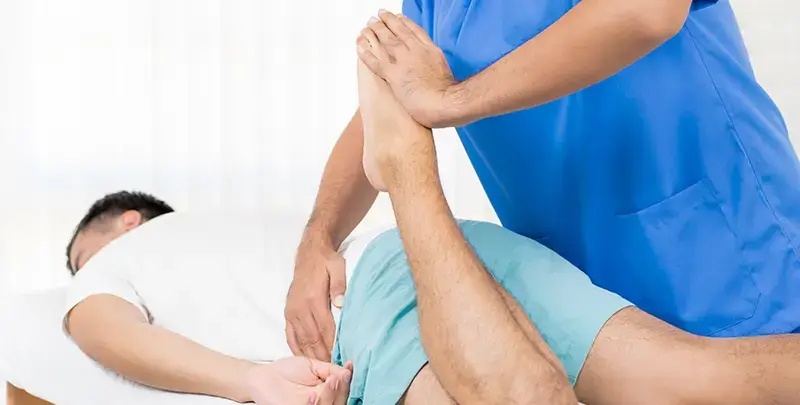
Patient-active manual therapy using gentle isometric contractions against a clinician-controlled counterforce to restore muscle length, normalize tone, and improve joint mobility through neurophysiological reflexes including post-isometric relaxation and reciprocal inhibition. Applied when muscular hypertonicity or shortening contributes to joint restriction or pain.
The manual therapy assessment is a systematic, hypothesis-driven process that identifies the source and contributing factors of the patient's musculoskeletal complaint:
Patient History and Symptom Mapping: Detailed analysis of symptom behavior, aggravating and easing factors, 24-hour pattern, mechanism of onset, and functional limitations to develop initial hypotheses about the involved structures, pain mechanisms, and contributing factors.
Screening and Differential Diagnosis: Systematic screening for red flags, neurological involvement, visceral referral, and conditions that may require medical referral. Includes cervical artery screening for cervical presentations and neurological examination where indicated.
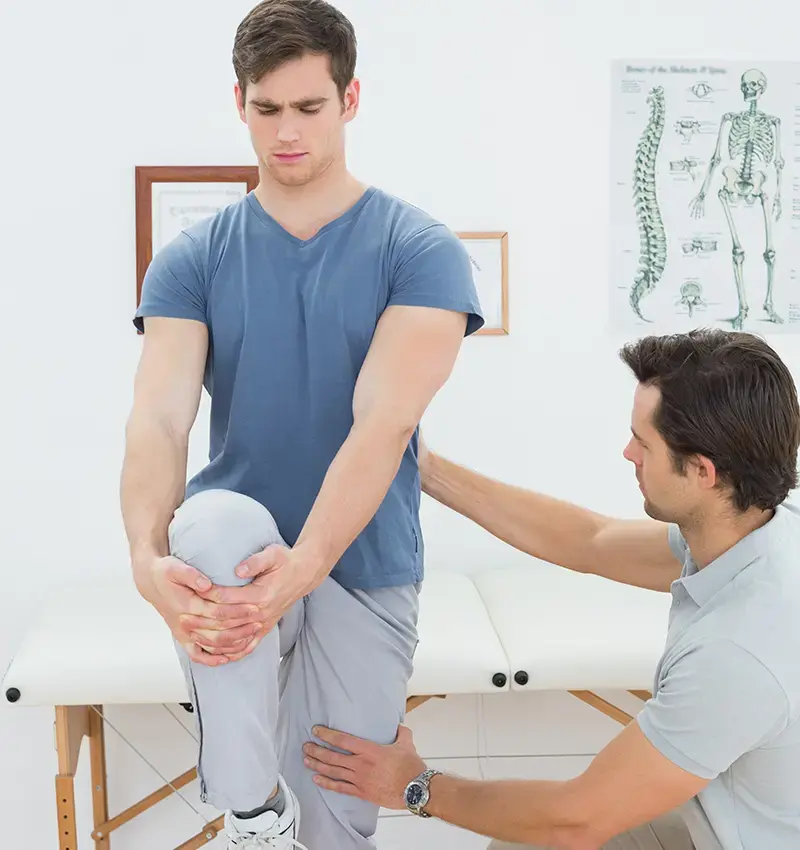
Active and Passive Movement Analysis: Assessment of active range of motion, movement quality, and symptom response, followed by passive range of motion and end-feel assessment to differentiate between joint, muscular, and neural sources of restriction.
Accessory Joint Testing: Passive assessment of the small accessory movements (glides, rotations, distractions) that occur between joint surfaces during normal physiological motion. These are the movements that manual therapy directly restores.
Special Testing: Provocation and relief tests, neurodynamic assessment, muscle length and strength testing, and functional movement analysis to confirm or refute clinical hypotheses.
Treatment and Reassessment: Application of the selected manual technique followed by immediate reassessment of the comparable sign (the movement or test that reproduced the patient's symptoms). Improvement confirms the clinical hypothesis; no change prompts modification of the approach.
Orthopedic manual therapy is applicable across a wide range of musculoskeletal conditions affecting the spine, extremities, and peripheral nervous system


Acute, subacute, and chronic low back pain
Mechanical neck pain and cervicogenic headache
Thoracic spine pain and rib dysfunction
Shoulder impingement, frozen shoulder, and rotator cuff-related pain
Lateral and medial epicondylalgia (tennis and golfer's elbow)
Knee osteoarthritis and patellofemoral pain
Ankle sprains and recurrent ankle instability
Temporomandibular joint dysfunction
Peripheral nerve entrapment (carpal tunnel, cubital tunnel, thoracic outlet)
Lumbar and cervical radiculopathy (as part of a multimodal approach)
Post-surgical joint stiffness and movement restriction
Hip impingement and labral-related pain
Orthopedic manual therapy is the central clinical reasoning engine of The S.H.I.V.A. Method. Every patient encounter begins with a comprehensive manual therapy assessment that identifies the specific impairments driving the clinical presentation. From this assessment, the clinician determines which manual interventions, regenerative technologies, exercise strategies, and neuromuscular training approaches are indicated for that individual patient.
Within this framework, manual therapy serves three essential functions:
Manual therapy is not intended as a long-term passive intervention. The goal is to restore the mechanical and neurophysiological conditions necessary for the patient to fully engage in active rehabilitation, build strength, and develop the movement capacity needed to prevent recurrence.
Understanding what happens during an orthopedic manual therapy session can help you feel more comfortable and prepared. Every session follows a structured process of assessment, treatment, and reassessment, with clear communication throughout.
A comprehensive manual therapy evaluation typically takes 45 to 60 minutes and includes detailed history, movement assessment, hands-on examination, and initial treatment.
Each session begins with reassessment of your primary complaints and comparable signs, followed by targeted manual therapy combined with therapeutic exercise and functional training.
1 to 2 times per week, adjusted based on the condition's acuity and your response to treatment.
The duration depends on the condition. Acute presentations may resolve within 3 to 6 sessions. Chronic or complex conditions typically more sessions.
Manual therapy techniques range from gentle oscillatory movements to brief thrust techniques. Your clinician will explain each technique before applying it and will monitor your response throughout.
It is common to feel immediate improvement in mobility and reduced pain. Some patients experience mild soreness in the treated area for 12 to 24 hours, similar to post-exercise tenderness.
Orthopedic manual therapy may be appropriate for individuals who:

Have musculoskeletal pain with identified joint, soft tissue, or neural impairments on clinical examination
Present with restricted joint range of motion that correlates with accessory joint findings
Experience persistent pain that has not responded to exercise, medication, or passive modalities alone
Have post-surgical stiffness or movement limitation requiring skilled manual intervention
Present with peripheral nerve entrapment or neural mechanosensitivity
Need a thorough differential diagnosis to identify the specific source of their musculoskeletal complaint
Want an active, evidence-based rehabilitation approach that combines skilled hands-on care with progressive exercise
Manual therapy techniques have specific contraindications that vary by technique and region. All contraindications are thoroughly screened during the clinical examination, and treatment is always based on informed consent.
Orthopedic manual therapy involves advanced, specialized training in hands-on assessment and treatment of musculoskeletal conditions. While all physical therapists learn basic manual techniques, orthopedic manual therapy represents a deeper level of clinical reasoning, examination skill, and technique proficiency.
The mechanisms of manual therapy in the treatment of musculoskeletal pain: a comprehensive model.
Read Full StudyUnraveling the mechanisms of manual therapy: modeling an approach.
Read Full StudyThe mechanisms of manual therapy: a living review of systematic, narrative, and scoping reviews.
Read Full StudyEffects of orthopedic manual therapy on pain sensitization in patients with chronic musculoskeletal pain: an umbrella review with meta-meta-analysis.
Read Full StudyEffects of manual therapy and strengthening exercise on pain in patients with knee osteoarthritis: a systematic review and meta-analysis.
Read Full Study