
Therapeutic taping is a clinical intervention that uses specialized elastic and rigid adhesive tapes applied to the skin to influence pain, joint mechanics, proprioception, neuromuscular activation, and movement patterns. Taping has been used in sports medicine, orthopedic rehabilitation, and physical therapy for decades, and the variety of taping systems available today allows clinicians to match the type of tape, tension, direction, and application technique to the specific clinical goal.
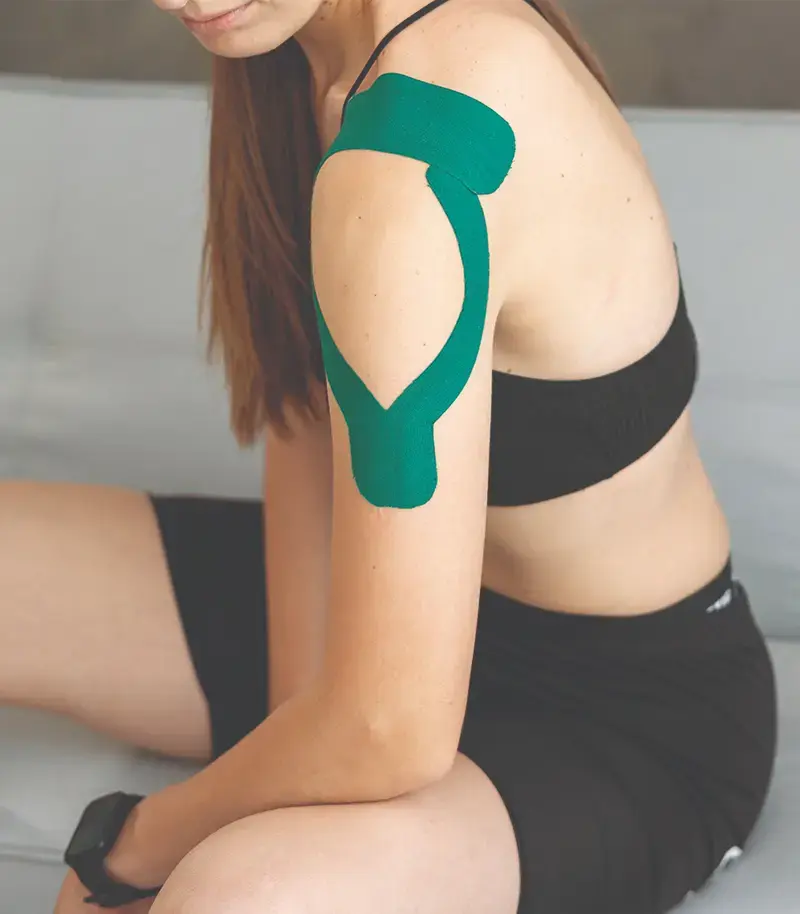
Elastic therapeutic tape is a flexible, cotton-based or synthetic adhesive tape with stretch properties similar to human skin. It is designed to be worn for multiple days and works primarily through cutaneous mechanoreceptor stimulation, fascial decompression, and neuromuscular facilitation without restricting joint range of motion.
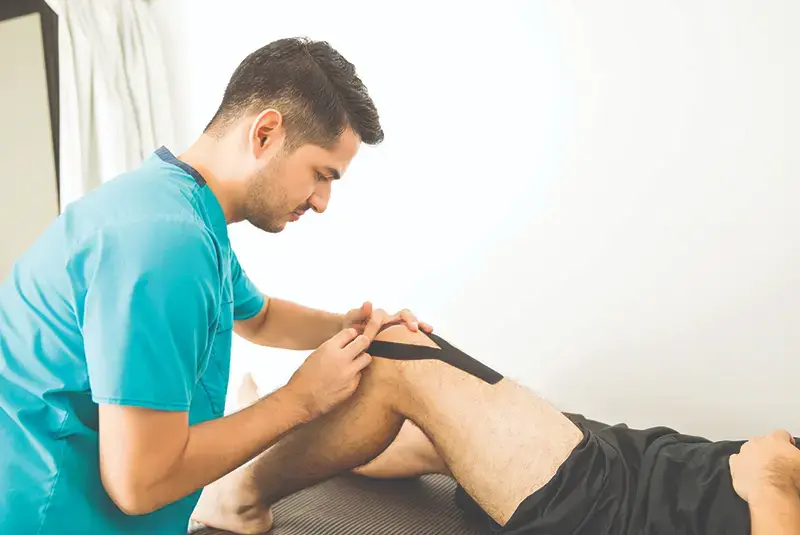
Rigid therapeutic tape is a non-elastic or minimally elastic adhesive tape that provides structural support, joint stabilization, and mechanical correction. It is used to restrict unwanted movement, offload painful structures, correct alignment, and protect healing tissue during activity. Rigid taping is commonly used for joint stabilization, patellar tracking correction, postural correction, and acute injury management.
At Shiva Physical Therapy, therapeutic taping is applied as a clinical tool within a comprehensive regenerative framework. It is not used as a standalone treatment or cosmetic application. It is selected and applied based on clinical evaluation to serve specific therapeutic goals, including pain modulation, proprioceptive enhancement, joint protection, neuromuscular re-education, and support of the tissue healing environment between treatment sessions.
Therapeutic taping works through several neurophysiological and biomechanical mechanisms depending on the type of tape used, the tension applied, the direction of application, and the anatomical structures being targeted. The primary mechanisms include cutaneous sensory stimulation, mechanical support, proprioceptive facilitation, and tissue decompression.

Stimulate cutaneous mechanoreceptors (Ruffini endings, Meissner corpuscles, Merkel cells, Pacinian corpuscles), increasing sensory input to the central nervous system about joint position, movement, and loading
Enhance proprioceptive accuracy and joint position sense, helping the neuromuscular system detect and respond to movement more effectively
Provide mechanical support and restrict unwanted joint motion (rigid tape), protecting healing tissue and preventing re-injury during activity
Create a microscopic lifting effect on the skin (elastic tape), which may decompress subcutaneous tissue, improve local microcirculation, and facilitate lymphatic drainage
Influence patellar tracking, scapular positioning, or joint alignment through directed mechanical pull
Reduce pain through gate control mechanisms, where increased tactile input through the tape competes with and may inhibit nociceptive (pain) signaling at the spinal cord level
Facilitate or inhibit specific muscle groups depending on the direction and tension of application, supporting neuromuscular re-education
Provide constant proprioceptive feedback during daily activities and exercise, extending the therapeutic effect of clinical treatment between sessions

A 2024 systematic review and meta-analysis involving 91 studies and 2,718 individuals found that both elastic and rigid taping produced significant improvements in joint repositioning accuracy compared to no tape, indicating that taping enhances proprioceptive performance across multiple joint regions and populations.
When applied with clinical precision and integrated within a structured rehabilitation framework, therapeutic taping serves as an extension of clinical treatment into the patient's daily life, reinforcing movement correction, pain reduction, and neuromuscular patterning between sessions.
Many people associate taping with athletic competition or cosmetic trends. Clinical therapeutic taping at Shiva Physical Therapy is fundamentally different. It is a precision intervention applied with specific clinical reasoning based on individual evaluation findings.
Therapeutic taping is different because it:
Is selected based on clinical assessment, not applied as a routine or one-size-fits-all technique
Uses different tape types (elastic, rigid, or combination) matched to the specific therapeutic goal
Applies specific tension, direction, and anchoring strategies based on the biomechanical and neuromuscular effect desired
Extends the therapeutic effect of clinical treatment into the patient's daily activities, work, and exercise
Serves as both a treatment tool and a clinical assessment tool, as the patient's response to taping provides valuable diagnostic information about pain drivers and movement dysfunction
Is integrated within a comprehensive treatment plan, not used in isolation

Therapeutic taping bridges the gap between what happens during a treatment session and what happens between sessions. By providing continuous sensory input, mechanical support, or movement guidance throughout the day, taping helps reinforce the neuromuscular and biomechanical changes being developed through manual therapy, exercise, and regenerative interventions.
Research suggests that therapeutic taping may contribute to several biological and neurophysiological responses depending on the type, tension, and application method:
Stimulation of cutaneous mechanoreceptors, increasing afferent sensory input to the central nervous system
Microscopic lifting of the skin, creating space in the subcutaneous layer that may reduce pressure on pain receptors and improve local fluid dynamics
Enhanced superficial lymphatic flow and reduction of local edema and swelling
Improved local microcirculation and blood flow in the taped region
Facilitation or inhibition of targeted muscle groups through direction-specific application
Modulation of muscle tone and reduction of protective muscle guarding
Enhanced proprioceptive awareness and joint position sense

Mechanical restriction of unwanted joint motion, protecting healing tissue and preventing re-injury
Correction of joint alignment and patellar tracking through directed mechanical force
Enhanced joint stability in hypermobile or unstable joints
Offloading of painful or damaged structures by redistributing mechanical stress
Improved proprioceptive accuracy, particularly in fatigued or unstable joints
Reduction in pain through mechanical support and decreased stress on sensitized tissue
Pain modulation through gate control theory, where tactile input from the tape competes with nociceptive signaling
Increased cortical body awareness and sensorimotor integration
Psychological confidence and reduced fear of movement (kinesiophobia), enabling patients to participate more fully in rehabilitation exercises
These mechanisms may help create conditions where patients can move more confidently, exercise more effectively, and recover more completely between treatment sessions.
Therapeutic taping is used to support the body's neuromuscular and biomechanical function by providing continuous sensory input, mechanical support, and movement guidance. It does not heal tissue directly. It helps create conditions under which the body can move better, hurt less, and respond more effectively to other therapeutic interventions.
Immediate pain reduction during movement and daily activities
Improved joint stability and confidence during functional tasks
Enhanced proprioception and joint position awareness
Better patellar tracking and reduced anterior knee pain
Reduced swelling and edema in acute and subacute conditions
Improved posture and scapular positioning
Enhanced muscle activation or relaxation depending on application
Greater compliance with home exercise programs due to reduced pain during movement
Improved tolerance to progressive loading and therapeutic exercise
Reduced fear of movement and increased functional confidence
Each person's response depends on factors such as the nature of their condition, tissue sensitivity, movement patterns, and how taping is integrated within their broader treatment plan. Results are individual and not guaranteed.
At Shiva Physical Therapy, multiple taping systems are used depending on the clinical goal, the patient's condition, and the phase of recovery. The type of tape selected is always based on clinical reasoning and individual evaluation findings.
Elastic Therapeutic TapeElastic therapeutic tape is a flexible, adhesive tape with stretch properties designed to mimic the elasticity of human skin. It is applied with varying levels of tension to achieve different therapeutic effects. When applied with light tension over a muscle or fascial region, it provides continuous sensory input to cutaneous mechanoreceptors, enhancing proprioceptive awareness and neuromuscular control. When applied with moderate tension, it can facilitate or inhibit specific muscle groups, influence fascial tension, and support lymphatic drainage. Elastic tape is typically worn for three to five days and is water-resistant, allowing it to work continuously during daily activities, sleep, and exercise.
Neuromuscular facilitation and muscle re-education
Proprioceptive enhancement during functional training
Edema and swelling management following injury or surgery
Postural cueing and scapular repositioning
Fascial decompression over painful or restricted tissue
Supporting movement confidence in patients with kinesiophobia
Rigid therapeutic tape is a non-elastic, high-tensile adhesive tape that provides strong mechanical support, joint stabilization, and structural correction. It is used when the clinical goal requires restricting unwanted motion, correcting alignment, offloading a painful structure, or protecting healing tissue during weight-bearing or functional activity. Rigid tape is applied with precise directional intent and is typically used for shorter durations, often during treatment sessions, specific activities, or for 24 to 48 hours depending on clinical need.
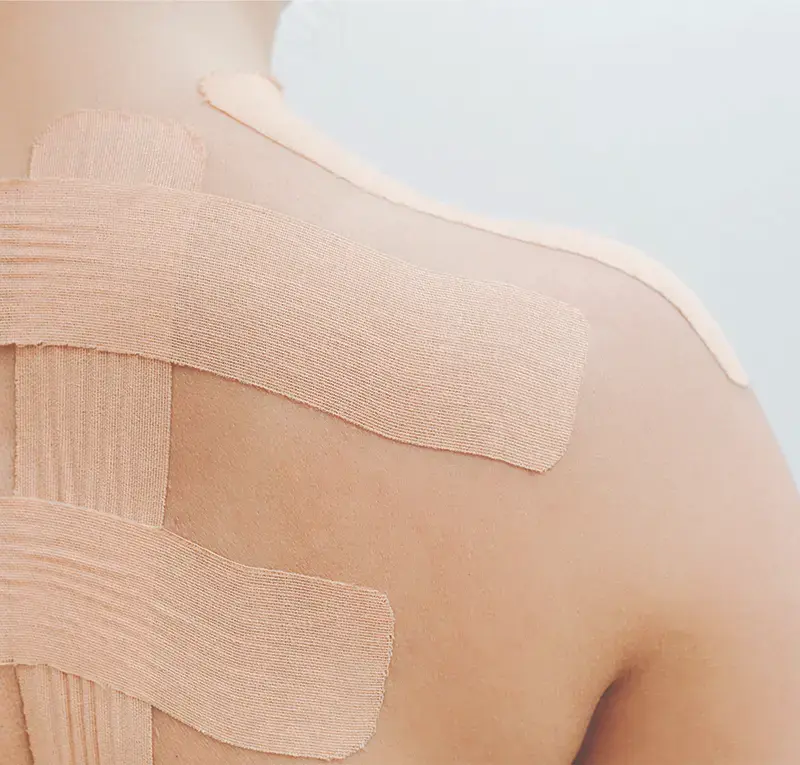
Patellar taping for patellofemoral pain, including medial glide techniques to improve tracking and reduce anterior knee pain
Ankle stabilization for acute sprains, chronic instability, or return-to-sport protection
Mechanical joint correction for hypermobile or malaligned joints
Offloading painful tendons, bursae, or ligaments during weight-bearing activity
Postural correction taping for thoracic kyphosis and scapular dysfunction
Protective taping during sport or high-demand activity to prevent re-injury

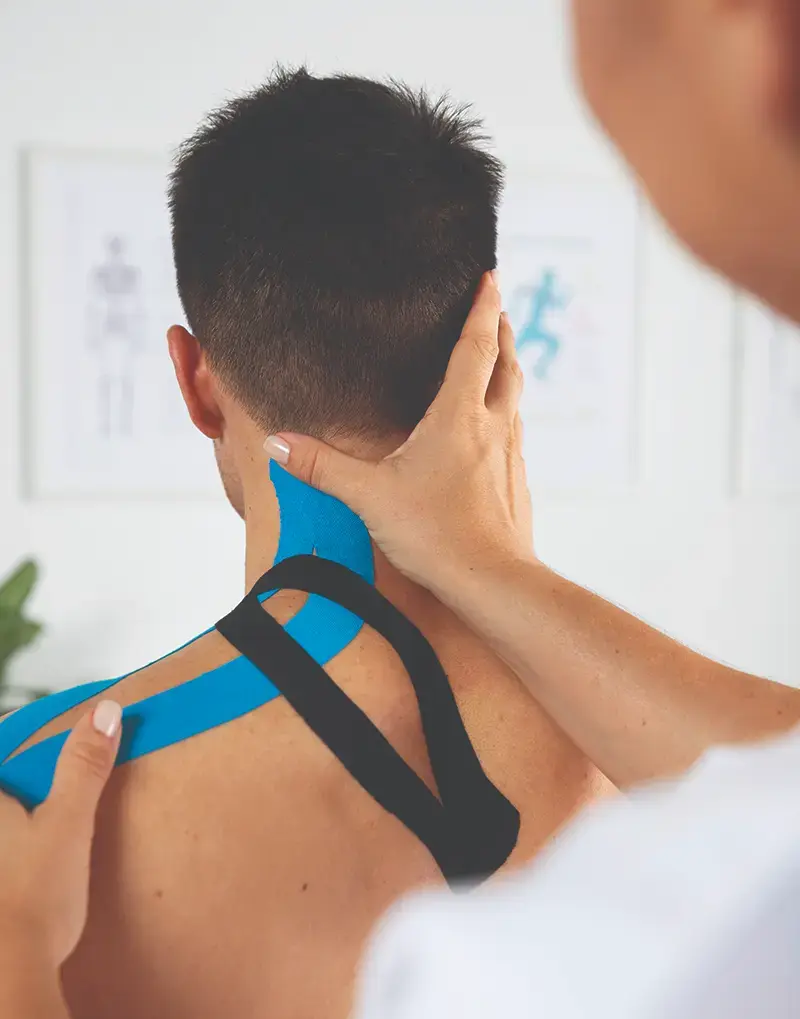
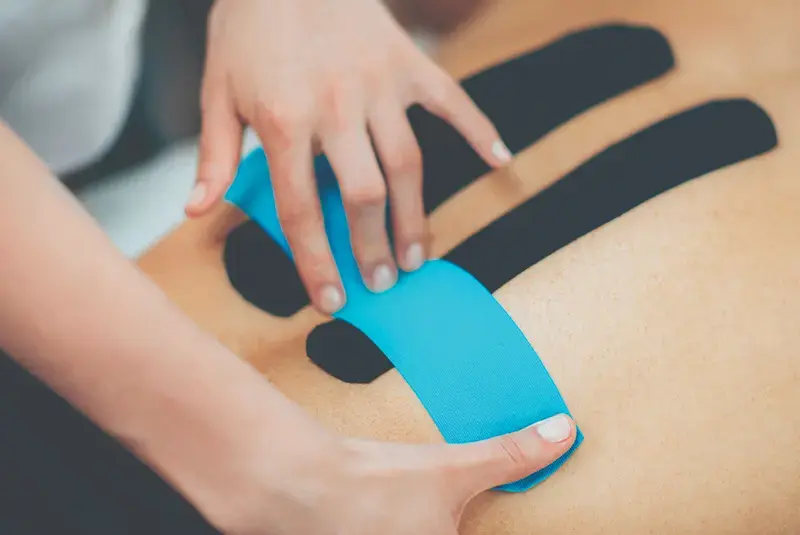
In many clinical situations, elastic and rigid tapes are used together in the same application. For example, a rigid tape may be used to correct patellar alignment, while elastic tape is layered over the surrounding musculature to enhance proprioceptive feedback and neuromuscular activation. This combination approach allows the clinician to achieve multiple therapeutic goals simultaneously, providing both structural correction and neuromuscular facilitation within a single taping application.
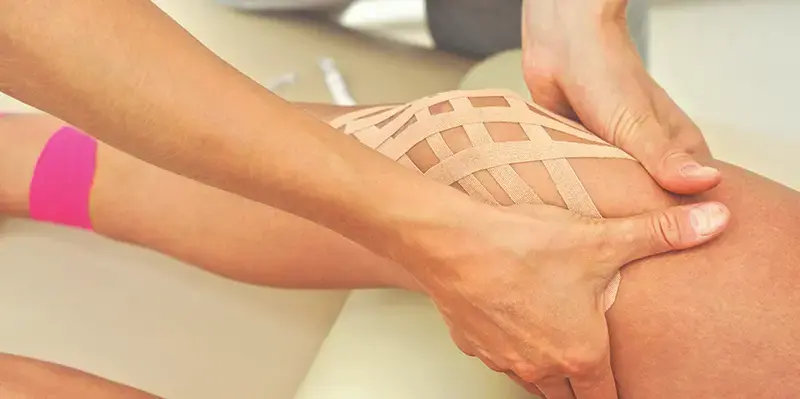
Specialized elastic taping techniques can be applied in fan-shaped or web patterns with minimal tension to create a lifting effect on the skin. This decompression approach is designed to reduce subcutaneous pressure, facilitate superficial lymphatic flow, and assist with the clearance of edema and swelling. It is commonly used in acute post-surgical management, post-traumatic swelling, and lymphatic conditions where improving fluid dynamics is a clinical priority.
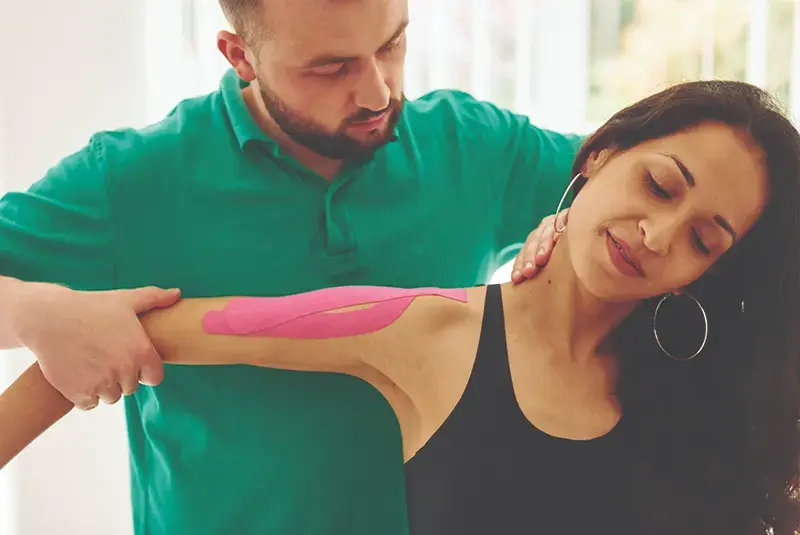
Neuromuscular taping involves applying elastic tape along the direction of specific muscle fibers or across muscle groups to either facilitate contraction or promote relaxation. By stimulating cutaneous receptors and providing directional sensory cues, neuromuscular taping helps retrain movement patterns, enhance muscle timing, and improve coordination. This approach is particularly valuable during the retraining phase of rehabilitation when the goal is to restore normal muscle activation sequencing and functional movement control.
The type of taping technique used depends on individual evaluation findings, clinical goals, tissue reactivity, and the phase of recovery. Your clinician will explain the purpose of each taping application and what to expect.
Therapeutic taping is commonly considered when clinical evaluation suggests that pain, joint instability, proprioceptive deficit, neuromuscular dysfunction, or movement impairment may benefit from continuous external support between treatment sessions.
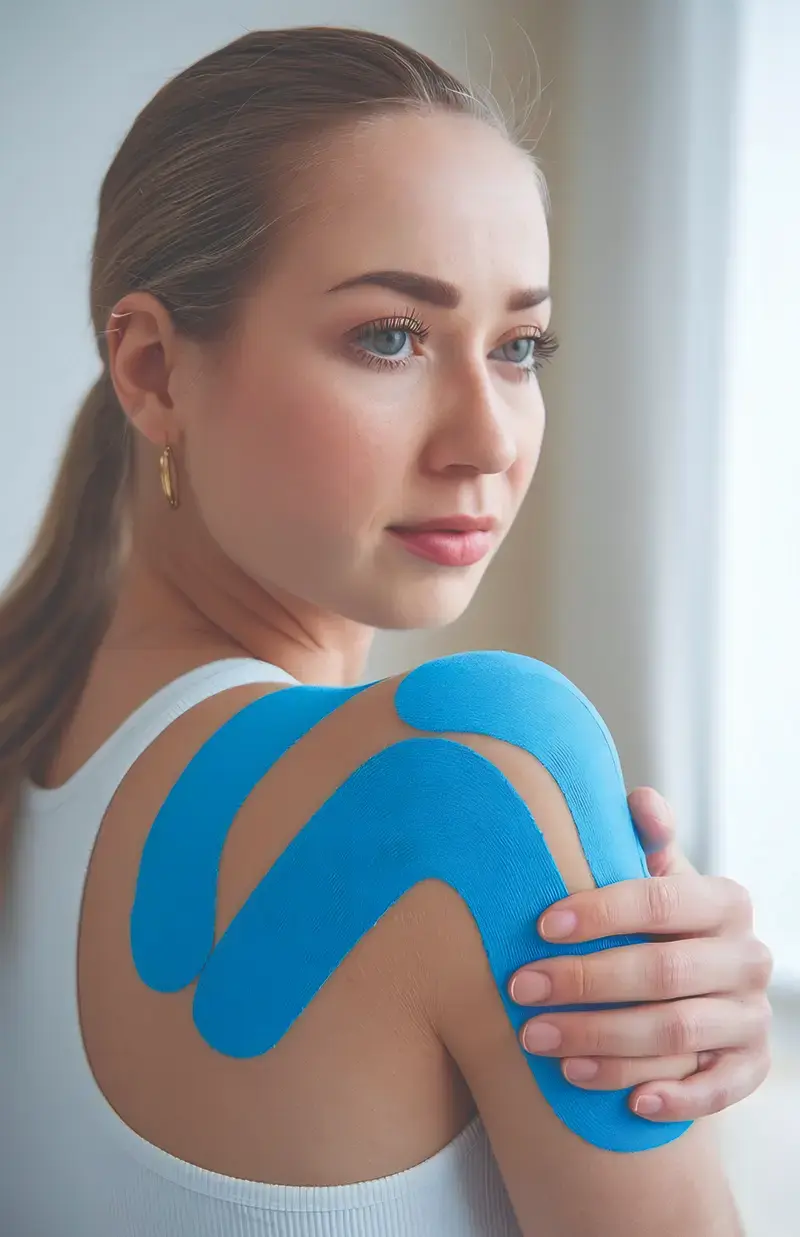

Patellofemoral pain syndrome (anterior knee pain)
Ankle sprains and chronic ankle instability
Shoulder impingement and rotator cuff dysfunction
Lateral and medial epicondylitis (tennis elbow, golfer's elbow)
Plantar fasciitis
Achilles tendinopathy
IT band syndrome
Low back pain with movement impairment
Neck pain with postural dysfunction
Post-surgical swelling and edema management
Scapular dyskinesis and thoracic postural correction
Patellar tracking disorders
Muscle strains and contusions during return to activity
Joint hypermobility requiring stabilization
Sports injuries requiring protected return to play
Neuromuscular re-education following injury, surgery, or neurological events
Not every condition or patient requires therapeutic taping. A thorough clinical assessment helps determine whether taping is appropriate and which taping system will best serve the patient's specific needs.
Therapeutic taping is not applied routinely or universally to every patient. Within The S.H.I.V.A. Method, taping is selected and applied based on clinical evaluation, individual presentation, and specific biomechanical, neuromuscular, or pain-related goals identified during assessment.
Our approach focuses on when to tape, what type of tape to use, and when taping is not the most effective intervention. This includes decisions such as:
Within The S.H.I.V.A. Method, therapeutic taping serves as a bridge between treatment sessions. It extends the effects of manual therapy, regenerative technologies, and neuromuscular training into the patient's daily activities, work, and exercise. As the patient progresses and neuromuscular control improves, the need for taping is systematically reduced.
Taping integrates with the broader strategy that also addresses:
When used appropriately, therapeutic taping can be a valuable contributor to regenerative physical therapy (RPT) by supporting the neuromuscular, biomechanical, and sensory environment needed for effective rehabilitation and lasting recovery.
Therapeutic taping applications are quick, targeted, and designed to complement your treatment session and extend its benefits into your daily life.p>
Taping typically takes 5 to 15 minutes depending on the complexity of the application and the number of areas being taped.
Wear Time Elastic therapeutic tape is designed to be worn for 3 to 5 days continuously. Rigid tape is typically worn for shorter durations 24 to 48 hours, depending on the clinical goal.
Some patients require taping for several weeks during the acute or re-education phase of recovery, while others may only need it for specific activities or short periods.
You may feel a gentle pulling, supportive pressure, or increased awareness of the taped area. The tape should never cause sharp pain, excessive tightness, numbness, or tingling.
The treatment area should be clean and dry. Excessive hair may be trimmed to improve adhesion. A skin preparation solution may be applied to sensitive skin or areas requiring longer wear time.
Elastic tape is best removed slowly in the direction of hair growth, ideally during or after a warm shower. Rigid tape may be removed using adhesive removal solution or gently peeled after loosening.
Many patients notice immediate changes in pain, movement quality, or joint confidence following taping application. The continuous sensory input provided by the tape reinforces the neuromuscular and biomechanical changes being developed during clinical treatment.
Therapeutic taping is considered when clinical evaluation suggests that pain, proprioceptive deficit, joint instability, neuromuscular dysfunction, or movement impairment may benefit from continuous external support and sensory feedback between treatment sessions.
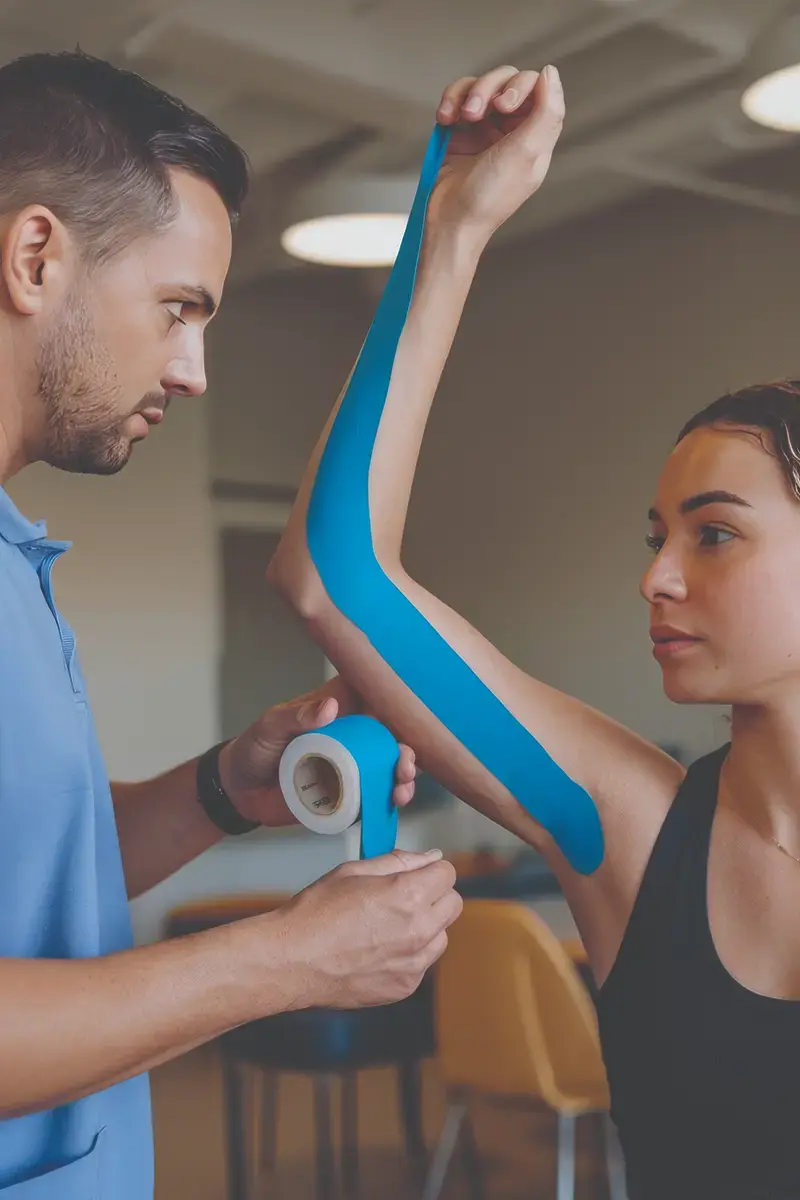
Therapeutic taping may be appropriate for individuals who:
Have pain during movement that limits their ability to exercise or participate in rehabilitation
Present with joint instability or recurrent sprains requiring mechanical support
Experience proprioceptive deficits or reduced joint position awareness
Need patellar tracking correction or joint alignment support
Have post-surgical or post-traumatic swelling requiring lymphatic facilitation
Show neuromuscular dysfunction requiring facilitation or inhibition of specific muscle groups
Are athletes returning to sport who need protected activity during the transitional phase
Have postural dysfunction requiring continuous cueing between treatment sessions
Demonstrate fear of movement or reduced confidence during functional tasks
Clinical screening determines suitability. Taping is contraindicated over open wounds, active skin infections, areas of compromised skin integrity, or in patients with known adhesive allergies. The decision to use therapeutic taping is always based on individual findings, overall clinical reasoning, and the patient's specific treatment goals.
Elastic therapeutic tape is a flexible, stretchable tape designed to be worn for multiple days. It works primarily through sensory stimulation, proprioceptive enhancement, and gentle fascial decompression without restricting movement. Rigid therapeutic tape is a non-elastic tape that provides structural support, joint stabilization, and mechanical correction by physically restricting unwanted motion. Both types serve different clinical purposes and may be used individually or in combination depending on your specific needs.
Influence of taping on joint proprioception: a systematic review with between and within group meta-analysis.
Read Full StudyEffects of elastic kinesiology taping on shoulder proprioception: a systematic review.
Read Full StudyThe effects of rigid and elastic adhesive tape on pain in musculoskeletal and sports conditions: a systematic review with meta-analysis of randomized controlled trials.
Read Full StudyEfficacy of kinesio taping compared to other treatment modalities in musculoskeletal disorders: a systematic review and meta-analysis.
Read Full StudyEffect of kinesiology taping on pain in individuals with musculoskeletal injuries: systematic review and meta-analysis.
Read Full StudyEffects of kinesio taping versus McConnell taping for patellofemoral pain syndrome: a systematic review and meta-analysis.
Read Full StudyProlonged taping with exercise therapy for patellofemoral pain in adults: a systematic review and single-arm meta-analysis.
Read Full StudyEfficacy of kinesio taping in treatment of shoulder pain and disability: a systematic review and meta-analysis of randomised controlled trials.
Read Full StudyTactile stimulation with kinesiology tape alleviates muscle weakness attributable to attenuation of Ia afferents.
Read Full StudyKinesio taping improves pain, range of motion, and proprioception in older patients with knee osteoarthritis: a randomized controlled trial.
Read Full Study