




The wrist and hand are built for precision and power simultaneously. Every grip, pinch, push, and fine-motor task depends on the coordinated work of small carpal bones, the radius and ulna, joint cartilage, ligaments, tendons, nerves, and fascia, all guided by muscle control from the forearm, elbow, shoulder, and neck. The median, ulnar, and radial nerves pass through narrow tunnels and soft-tissue corridors, and even small changes in pressure, inflammation, or mechanics can alter how the entire hand feels and functions.
Wrist and hand pain can show up as:

Aching or burning around the wrist or thumb with gripping, lifting, or typing
Numbness, tingling, or “pins and needles” in the thumb, fingers, or palm
Sharp pain with weight-bearing through the hands (planks, push-ups, yoga)
Stiffness, catching, or locking of a finger or thumb (“triggering”)
Weak grip, dropping objects, or fatigue with simple tasks (opening jars, writing)
Swelling, stiffness, or deformity around finger joints or the base of the thumb
Pain that worsens at night, with repetitive work, or after falls/twists

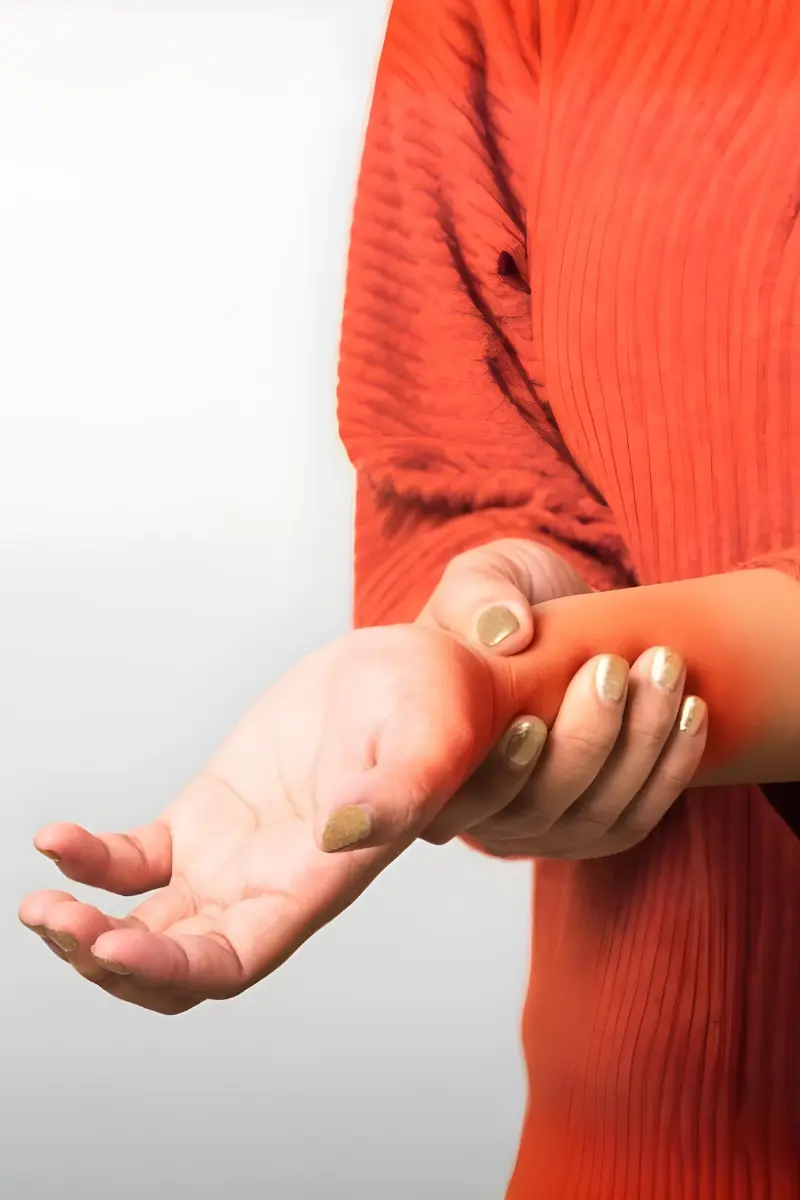
Many people are surprised to learn that wrist and hand pain are rarely just a local “tendon strain” or “carpal tunnel problem.” Even when scans or nerve tests show changes, many people with similar findings have little or no symptoms. Pain, weakness, stiffness, or numbness often come from the system around the wrist and hand: how the neck and shoulder load the arm, how the elbow and forearm share stress, how fascia glides, how nerves are behaving, and how posture, stress, and repetition have conditioned the tissues over time.
If inflammation builds up, circulation slows, fascia and retinaculum tissues tighten, or muscles stay in constant protection mode, the wrist and hand may feel painful, clumsy, sensitive, or unreliable, especially with gripping, weight-bearing, fine-motor tasks, or at night. Some nerve-related pain patterns, such as Complex Regional Pain Syndrome (CRPS) or complex pain syndromes after fractures, sprains, or surgery, can cause burning, color change, swelling, and movement fear when the nervous system stays in a prolonged stress loop.
At Shiva Physical Therapy, we respect traditional care, splinting, activity modification, strengthening, stretching, and manual techniques. The S.H.I.V.A. Method was designed as a regenerative physical therapy extension to this care, not a replacement. It adds smarter, whole-system support to improve circulation, fascia health, nerve mobility, tendon and ligament repair environment, and load-sharing from neck to fingertips, helping your wrist and hand recover more naturally, confidently, and sustainably, especially in complex or recurring cases.
At Shiva Physical Therapy, we support recovery for a wide range of wrist- and hand-related pain and movement problems, including both common and under-recognized conditions:
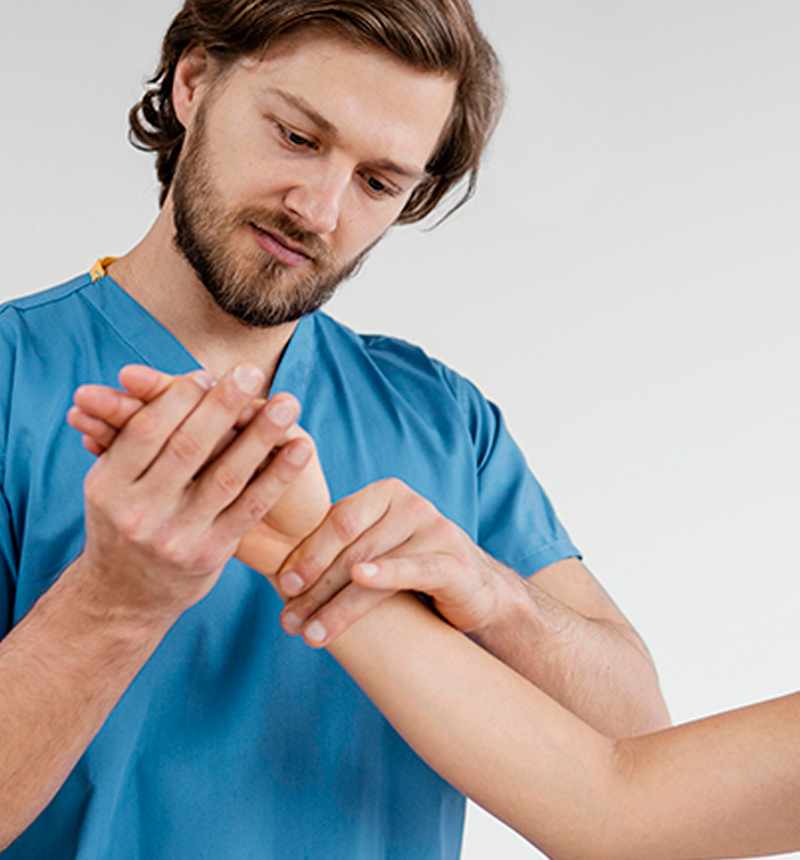

Carpal Tunnel Syndrome (median nerve compression at the wrist)
Radial nerve irritation or superficial radial nerve sensitivity
De Quervain’s Tenosynovitis (thumb tendon irritation at the radial wrist)
Flexor and extensor tendinopathies (overuse tendon pain in the wrist/hand)
Trigger Finger or Trigger Thumb (stenosing tenosynovitis)
TFCC (Triangular Fibrocartilage Complex) irritation or tears
Wrist sprains, TFCC load injuries, and ligamentous instability
Metatarsalgia and forefoot overload
Post-fracture stiffness, weakness, and altered load behavior (radius, scaphoid, etc.)
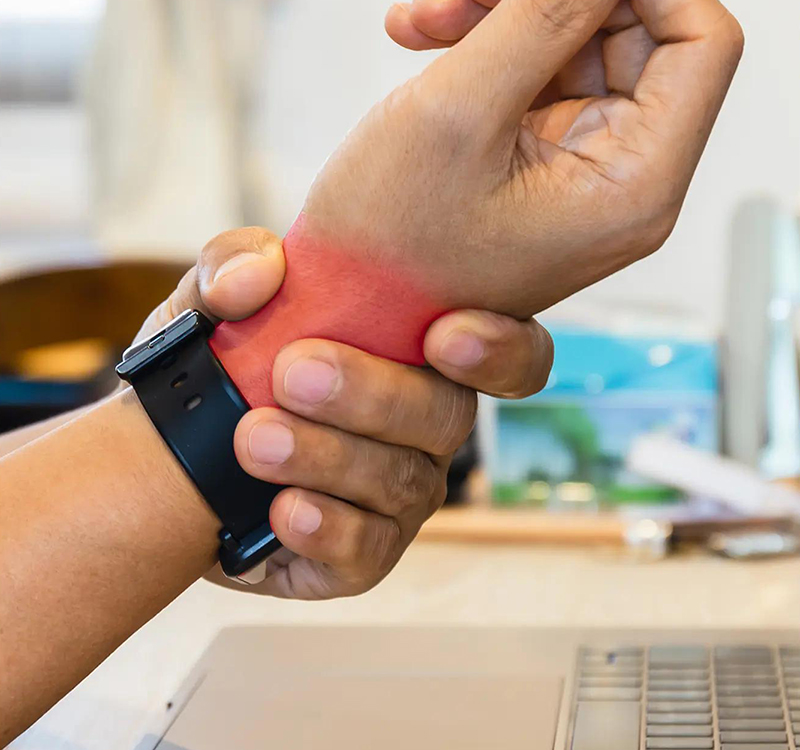
Thumb CMC (base of thumb) osteoarthritis and other hand joint arthritis patterns
Early cartilage stress or joint-surface irritation of wrist and finger joints
Ganglion cyst–related load intolerance and surrounding tissue sensitivity
Complex Regional Pain Syndrome (CRPS) and post-injury pain-amplification patterns
Overuse and repetition-related strain from typing, manual work, lifting, caregiving, or sports
Post-surgical wrist and hand pain where symptoms persist beyond normal healing time
Sinding-Larsen-Johansson Syndrome (youth patellar tendon insertion stress)
Wrist and hand symptoms are rarely just one small issue. They are often a sign that load, nerve behavior, circulation, fascia tension, and muscle timing from the neck to the fingertips are not working in harmony. Smarter recovery starts when these structures work together as a connected chain and are supported by biologically guided, regenerative care.
If conventional wrist and hand care truly worked, why are so many people still avoiding typing, lifting, gripping, or weight-bearing through their hands because of ongoing pain, numbness, or weakness?


If your body is doing the healing, shouldn’t your recovery plan support tissue healing in the wrist and hand joints, encourage tendon and nerve health, calm sensitive sensory pathways, and rebalance load behavior from the neck to the fingertips, not just treat one small area in isolation?
The wrist and hand are not powered by one tendon or one nerve alone; they are driven by a coordinated system extending from the cervical spine all the way to the fingertips. Pain may start after a fall, repetitive strain, pregnancy-related swelling, work demands, or surgery, but what keeps it going is often a deeper chain reaction involving the neck, shoulder girdle, elbow, forearm musculature, carpal alignment, tendon sheaths, fascia tunnels, and nerve pathways.
When any part of this system stays inflamed, compressed, or guarded, it can trap the wrist and hand in a protective stress loop, reducing circulation, limiting smooth tendon glide, compressing nerves, and keeping the pain alarm turned up even for normal daily tasks.
Most traditional therapy treats the area layer-by-layer: rest in a brace, stretch what feels tight, do some grip or band exercises, and manual therapy or massage the painful zone. These can help in the short term, but recurrent or long-standing wrist and hand pain often means that root stress factors, like cervical and shoulder load, poor forearm mechanics, tissue dysfunction, fascia tension in tunnels and retinaculum, or nerve hypersensitivity, were never fully reset in the right order.
Modern regenerative physical therapy shows that better recovery happens when healing biology and movement coordination are restored together:

Microcirculation improves, and swelling behavior calms
Tendon and ligament fibers remodel and become more tolerant
Nerves glide and signal more quietly instead of staying “on high alert.”
Neck–shoulder–elbow–wrist–hand mechanics begin to share the load more evenly
Fascia and retinaculum structures allow smoother movement through small tunnels
Sleep comfort, grip confidence, and task tolerance improve step-by-step
The S.H.I.V.A. Method was designed to add that missing layer-linked healing support, guiding the body out of pain and protection loops and back into calmer tissue behavior, smoother movement, and natural recovery progression.
At Shiva Physical Therapy, we know that traditional care can be helpful, especially early on. But many people need extra, targeted support to get back to full, confident use of their hands without constant flare-ups. That’s why we use the S.H.I.V.A. Method as an additional, body-led recovery pathway that works with traditional treatment, not instead of it, and not limited to routine protocols.
 Focuses on painful wrist or hand structures (e.g., “carpal tunnel,” “tendonitis”) in isolation
Adds general symptom-relief interventions like bracing, generic stretches, heat/ice, massage, dry needling, manual therapy, or basic strengthening
Progresses exercises and brace weaning by time or protocol
May rely on repeated injections or long-term brace use for temporary symptom control
Best for simple, early-stage issues with low irritability
Evaluates the entire neck–shoulder–elbow–forearm–wrist–hand chain, including nerve pathways, fascia tunnels, tissue dysfunctions, Joint mechanics, posture load, and task demands
Enhances care with precision regenerative modalities and non-invasive neuromodulation that improve circulation, nerve behavior, fascia health, and tendon/ligament repair
Progresses mobility, nerve glide, load tolerance, and fine-motor control using a graded, biology-paced sequence aligned with tissue and nervous system response
RSupports tissue repair, nerve calmness, and load symmetry naturally to reduce dependence on medications, injections, and long-term bracing wherever possible
Ideal for stubborn, recurring, or complex wrist & hand cases needing deeper system-level recalibration and biologically guided tissue support
Focuses on painful wrist or hand structures (e.g., “carpal tunnel,” “tendonitis”) in isolation
Adds general symptom-relief interventions like bracing, generic stretches, heat/ice, massage, dry needling, manual therapy, or basic strengthening
Progresses exercises and brace weaning by time or protocol
May rely on repeated injections or long-term brace use for temporary symptom control
Best for simple, early-stage issues with low irritability
Evaluates the entire neck–shoulder–elbow–forearm–wrist–hand chain, including nerve pathways, fascia tunnels, tissue dysfunctions, Joint mechanics, posture load, and task demands
Enhances care with precision regenerative modalities and non-invasive neuromodulation that improve circulation, nerve behavior, fascia health, and tendon/ligament repair
Progresses mobility, nerve glide, load tolerance, and fine-motor control using a graded, biology-paced sequence aligned with tissue and nervous system response
RSupports tissue repair, nerve calmness, and load symmetry naturally to reduce dependence on medications, injections, and long-term bracing wherever possible
Ideal for stubborn, recurring, or complex wrist & hand cases needing deeper system-level recalibration and biologically guided tissue support

We don’t force the wrist or hand to “push through” pain or simply rely on strengthening alone. We reset the systems that support wrist and hand health, tissue healing, load distribution, joint mechanics, fascia behavior, nerve calmness, and whole-arm coordination, so your hands can work with less stress and more trust.
Every plan is individualized and matched to your biology, your triggers, and your phase of healing.

Regenerative physiology
Neuro-modulation techniques
Fascia science applications
Autonomic balancing protocols
Personalized movement retraining
Instead of generic routines, we build a phased plan that matches your sensitivity, flare patterns, and lifestyle demands.

Choosing Shiva Physical Therapy means stepping into a smarter, body-paced wrist & hand recovery plan designed to restore comfort, function, and long-term confidence, not just manage symptoms.
Our goal is not just to calm wrist and hand symptoms, but to restore comfortable movement, strength, and coordination you can trust. By addressing the true drivers of dysfunction and guiding healing at the tissue and nervous system levels, this regenerative, phase-specific approach helps you return to daily tasks, work, and activity with confidence, without fear of recurring pain or flare-ups.
It’s a regenerative, system-focused model that addresses the underlying dysfunctions limiting wrist and hand recovery for lasting results.

Call Shiva Physical Therapy today and discover a smarter, regenerative approach that treats the root cause, not just the symptoms.
 Contact Us Today
 Same-day Appointment
 No referral needed