How Shiva Physical Therapy combines regenerative care, advanced technology, and the S.H.I.V.A. Method®, with the evidence behind each one.
Shiva Physical Therapy combines regenerative science, advanced rehabilitation technology, and The S.H.I.V.A. Method® into one clinical model built around finding the cause of dysfunction and treating it, rather than chasing the symptom and managing it. It exists to answer a question patients keep asking: after years of therapy, chiropractic, and other conservative care, why do so many still end up in injections and surgery? What makes the standard different is not the equipment list. It is that every technology is chosen based on published evidence, sequenced inside a plan of loading exercises, and measured by function rather than by how the patient feels for the next two days.
Patients arrive with better questions and knowledge than they used to.
Those questions deserve better answers than a printed sheet of exercises, some manual therapy, electrical stimulation, ultrasound, and a hot pack. They also deserve better than a room full of the latest equipment used without a plan.
The gap is not a lack of great therapists. It is a payment structure that rewards volume, a system that gives clinicians little room to adopt what is new, and a habit across the profession of integrating technology without first acquiring the depth of knowledge to apply it properly, then defending the purchase instead of learning the tool.
Here is a question worth sitting with, because it cuts both ways.
A surgeon will adopt a new technology, a new arthroscopic technique, an injection, or a new biologic on the strength of a case series and a manufacturer’s course. Physical therapy holds its own tools to a much higher bar and will argue for a decade about whether a modality has enough randomized trials behind it, while surgeons integrate that same technology successfully, and while the profession continues to lean on treatment philosophies that are decades old and that the evidence has since moved past.
That caution is a genuine strength. It is also, in practice, a reason patients wait years for options that already exist.
There is a second reason, and it is less flattering. Most of these technologies are not reimbursed. A clinic paid per visit under an insurance contract has no financial path to buying advanced equipment and then spending unpaid clinician time integrating it properly. The equipment does not fit the business model, so the business model quietly decides the standard of care.
Shiva Physical Therapy has integrated these technologies in daily practice for years, guided by international research and training, well before most outpatient clinics in the region had access to them. Not because newer is better, but because waiting for a modality to become common is not the same as waiting for it to become supported.
A standard is not a claim. A claim is something you put on a website. A standard is something you can be held to.
That distinction matters, because “advanced,” “innovative,” and “cutting-edge” appear on nearly every physical therapy website in the country, attached to wildly different levels of clinical rigor. The words have stopped carrying information.
Anyone can buy a device. What separates outcomes is knowing which tool the tissue needs, at what point in the healing process, and what has to follow it. No modality suits every condition or every patient who walks through the door. The right treatment at the wrong time, or applied to the wrong presentation, produces poor results, and that is a failure of application rather than a failure of the tool.
So here is what Shiva Physical Therapy holds itself to, and you can judge whether it is met:
The last one costs revenue. That is rather the point.
At the center of the clinic is The S.H.I.V.A. Method®, A 5-Phase Regenerative Framework® developed across more than two decades of clinical practice.
It is the applied form of Regenerative Physical Therapy: a non-invasive, whole-system approach to musculoskeletal rehabilitation that works at three connected levels, the tissue, the nervous system, and the mind. It combines advanced therapeutic technology, manual therapy, progressive loading exercises, and pain neuroscience education to rebuild function and support recovery that holds, with no injections, PRP, stem cells, or surgery involved.
The five phases are:
This is not a system that hands you a sheet of exercises and calls it root cause treatment. Not every condition responds to exercise alone. If it did, far fewer people would be electing injections and surgery every year. The volume of invasive procedures happening in this country is itself evidence that something is missing between the two ends of the care spectrum, and closing that gap is the work The S.H.I.V.A. Method® was built to do.
Beyond the phases, the framework sequences, so tissue capacity is restored before loading exercises are added, and loading before performance work. It decides, giving each phase criteria for progression based on tissue response rather than visit count. It integrates, applying technology, manual therapy, loading exercises, and education toward one objective instead of as separate services in the same hour. And it transfers, because the reasoning is documented and another clinician can pick up the case. A framework that only lives in one therapist’s head is not a standard.
Here is the section most clinic websites will not write, because it includes the parts that are unflattering.
| Technology | What the research supports | Where it is weaker |
|---|---|---|
| Focused and radial shockwave | Effective for lower limb and calcific tendinopathies across a meta-analysis of 22 studies | No better than alternatives for upper limb and non-calcific tendinopathies; review quality across the field rated critically low; adverse events around 12 percent, mostly soreness and skin irritation |
| Class IV laser | 48 randomized trials show reduced pain and improved function, strongest at knee and shoulder; 53 studies in roughly 2,800 patients show pain reductions near 30 percent | Evidence quality low to moderate; adds nothing over exercise when combined with it |
| EMTT | First sham-controlled randomized trial, 126 patients, better function and lower pain than sham at 6 and 12 weeks | Single-centre trial; a separate pilot found no benefit over sham in myofascial pain |
| INDIBA® radiofrequency | Randomized trial in Physiotherapy showed improved pain and function in knee osteoarthritis versus sham and standard care | Independent reviewers describe the evidence as sufficient to justify use, which is a lesser claim than proven |
| Microcurrent | FDA-cleared for musculoskeletal pain; operates far below the threshold that causes contraction or sensation | The thinnest record on this list; failed against placebo in painful diabetic neuropathy; mostly small trials and case series |
| Peripheral neuromodulation | Randomized, double-blind, sham-controlled trial of this specific device in peripheral neuropathic pain | Broader field has only five randomized trials and four case series behind it |
| Pain neuroscience education | Five high-quality trials in 460 patients show education plus exercise beats exercise alone; 17 studies in low back pain show reduced short-term pain and disability | Long-term effects inconsistent; works best combined with other care, not delivered alone |
Two findings from that table deserve more than a row, because together they determine how everything above gets used.
A 2025 network meta-analysis found high-intensity laser beat low-level laser as a standalone treatment, but that the difference disappeared once either was combined with exercise, and that physical therapy alone outperformed both. That is not a finding you will see in a laser vendor’s brochure.
A cohort study of nearly 5,000 patients with low back pain separated active interventions, meaning loading exercises and active movement, from passive interventions, meaning modalities applied to a patient who is doing nothing. A higher proportion of passive visits was associated with a modestly greater likelihood of escalation of care over the following year: opioid prescriptions, injections, specialty visits, hospitalization.
Read those together and the conclusion is unavoidable.
If you are a clinician reading this, or a patient who has learned to be wary of clinics that promise a lot, there are fair objections. Here they are, answered directly.
Is this just placebo?
Context effects are real, and they are part of every clinical encounter, including conventional physical therapy. But tissue healing is not placebo. It has physiology behind it, and when the body is struggling to heal, these inputs can change the conditions the tissue is working under. That is exactly why sham-controlled trials matter, and why we point to them where they exist. Where a modality has not been tested against sham, we have said so.
Is the research industry-funded?
Some of it is, and that is worth knowing. Parts of the device literature carry manufacturer ties. But the more important point runs the other way. Unlike pharmaceuticals, this field has little commercial funding behind it, and much of the research is done by clinicians on their own time. That is a large part of why the evidence base is thinner than it should be for technologies already in daily use by therapists worldwide. Thin evidence and disproven are not the same thing, and we try not to confuse them in either direction.
Are you cherry-picking the positive studies?
Judge that by the negative findings in the table above. Shockwave does not outperform alternatives for upper limb and non-calcific tendinopathies. Microcurrent failed against placebo. EMTT showed no benefit over sham in myofascial pain. Laser loses to exercise. A clinic that was cherry-picking would not print those. We publish them because they are the actual clinical information: they tell us which problems a modality suits, where it adds nothing, and what it has to be combined with. A negative finding in isolation is rarely a verdict on the tool. It is usually a verdict on using it alone.
Does exercise not beat all of this anyway?
In head-to-head comparisons, maybe in some conditions, and we agree. Loading exercises are the treatment. But there is a variable those comparisons rarely account for: tissue healing capacity declines with age and with chronicity. Exercise remains essential and is always part of the plan. The question is whether exercise alone is sufficient in tissue that has already demonstrated it is struggling to heal and unable to recover. That is the population this model was built for.
Is this not just expensive passive care?
That is the correct thing to worry about, and it is why the passive intervention data sits in this article at all. The distinction is integration. A modality applied on its own, to a patient doing nothing, reproduces the exact pattern research associates with worse outcomes. The same modality used to make loading exercises and manual work possible, then followed by those loading exercises, is a different intervention entirely. Technology here is time-limited, tied to tissue state, and never the endpoint.
So what actually separates this from a good conventional clinic, or from the growing number of cash-based clinics?
A conventional clinic is doing its best inside a payment structure that limits time, technology, and specificity. A good cash-based clinic escapes some of that, and typically offers a full hour, better exercise progressions, some manual therapy, and a modality or two. That is a real improvement in delivery.
But look at what is being delivered. Largely the same interventions, applied with more time and attention.
Regenerative Physical Therapy, applied through The S.H.I.V.A. Method®, is a different category of answer. It is a system for the chronic and stalled musculoskeletal cases the standard pathway does not resolve, built around three things a longer appointment alone cannot provide:
Two patients with identical imaging can need entirely different plans. Age, load history, tissue irritability, sleep, fear of movement, and what they need to return to all change the answer. Plans are revised against objective markers, not by feel and not by visit count.
Pain location and pain source are frequently different places. Assessment covers movement patterns, joint mechanics, neuromuscular control, load tolerance, and the demands the patient actually has to meet.
Not offered as add-ons, but selected by where the tissue is in the healing process and sequenced into the plan of loading exercises.
Being clear about this is part of the standard.
Regenerative Physical Therapy is not a replacement for surgery, and it is not a replacement for exercise. Plenty of patients do well with progressive loading exercises alone and need nothing more. Some have deteriorated far enough that surgical consultation is the right call, and delaying it does harm.
Most musculoskeletal care runs on two settings: exercise-based physical therapy, and then invasive intervention when that does not work. Patients get moved from the first to the second without anything in between. But there is a tier of conservative options sitting in that space, and the regenerative option is one most patients are never told exists. That middle tier is where this model lives: the best conservative option still available to try before going invasive.
Being explicit about the boundary is not a weakness in the pitch. It is what makes the rest of it believable.
A new standard for modern physical therapy is not a better piece of equipment, a bigger online presence, or a more confident website. It is a commitment to reasoning openly, treating causes rather than symptoms, leveraging technology to make loading exercises possible rather than to substitute for them, and telling patients the truth about what the evidence supports.
We have built a clinical decision-making framework that determines when technology is appropriate, when exercise alone is enough, when advanced conservative care is worth trying, and when a patient should be referred onward.
If you are dealing with pain that has not resolved with standard care, or you have been told surgery is the only option left, schedule an evaluation with Shiva Physical Therapy. Call 919-985-6389 or visit shivaphysicaltherapy.com.
Schedule an Evaluation

The difference sits in the clinical reasoning, not the marketing. Care follows The S.H.I.V.A. Method®, a defined regenerative framework with criteria for progressing between phases, and advanced technology is used to make loading exercises possible rather than as a substitute for them. Sessions are long enough to reason through a case, and treatment targets the source of dysfunction rather than the site of pain.
The S.H.I.V.A. Method® is A 5-Phase Regenerative Framework® developed over more than two decades of clinical practice: Simplify the Root Cause, Hone the Healing Plan, Integrate Advanced Therapies, Vitalize the Neuro-Musculoskeletal System, and Activate Functional Freedom. It works at three connected levels: the tissue, the nervous system, and the mind.
Parts of it are well supported, and parts are still emerging, and it is worth knowing which is which. Shockwave has solid evidence in specific applications. High-intensity laser has a substantial randomized trial base. EMTT now has a sham-controlled trial behind it. Microcurrent has the thinnest record of the group. We will tell you exactly where your specific condition sits before you commit to anything.
No. Some conditions need surgical consultation, and delaying it can cause harm. Regenerative Physical Therapy occupies the conservative tier between standard physical therapy and invasive intervention, which is the option most patients are never offered before being sent for injections or surgery.
Partly economics, partly training. These devices are largely not reimbursed by insurance, and applying them properly takes clinician time that a volume-based schedule does not allow. The equipment does not fit the payment model, so the payment model ends up deciding what care looks like.
The other half is learning to use them well. Buying a device takes an afternoon. Knowing which conditions respond to it, at what stage, and at what settings takes years, and that is what separates a good result from a disappointing one. (Most people can drive a car. That does not make most people good drivers.)
Chronic pain, tendinopathies, frozen shoulder and adhesive capsulitis, joint dysfunction, sports injuries, back and neck pain, nerve-driven pain, post-surgical plateaus, and complex cases that have not responded to conventional physical therapy.
Sooner than most people come in. An analysis of a national database of employer-sponsored health plans found that early physical therapy for new low back pain was associated with substantially lower odds of advanced imaging, surgery, injections, and opioid prescriptions than delayed physical therapy, along with lower total costs. A separate study following more than 150,000 insurance claims found patients who saw a physical therapist first had far lower odds of ever receiving an opioid prescription. Waiting rarely improves the situation.
Shiva Physical Therapy operates as a cash-based, out-of-network practice. That is what makes it possible to build each session around what your case actually needs and to use technology insurance does not reimburse.
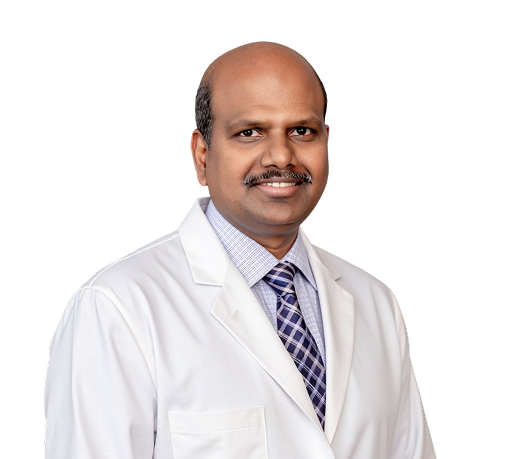
Dr. Siva Parnam, PT, DPT, Osteopractor
Founder, Shiva Physical Therapy | Creator of The S.H.I.V.A. Method®
Dr. Parnam is a pioneer of Regenerative Physical Therapy and the architect of a clinical model that integrates advanced therapeutic technology, neuroplastic re-education, and biopsychosocial care into musculoskeletal rehabilitation. With more than two decades of clinical experience, his work focuses on non-invasive, whole-system recovery for patients with acute injuries, chronic pain, tendon and joint conditions, post-surgical plateaus, and complex cases that have not responded to conventional physical therapy.

A Stage-Specific, Non-Invasive Approach with the S.H.I.V.A. Method.

How to Choose the Right Physical Therapist: A Patient-Friendly Guide.

Empowering You to Make Informed, Personalized Care Decisions.

Fill out the form and our team will respond promptly. For immediate assistance, call or text us directly.
 Modern Physical Therapy
Regenerative Care
S.H.I.V.A. Method
Evidence-Based Technology
Progressive Loading
Root Cause Treatment
Most Physical Therapists are excellent clinicians working inside a system that limits them. Long hours. Overwhelming insurance paperwork.