Impulse iQ



Impulse iQ
What Is the Impulse iQ® Adjusting Tool?
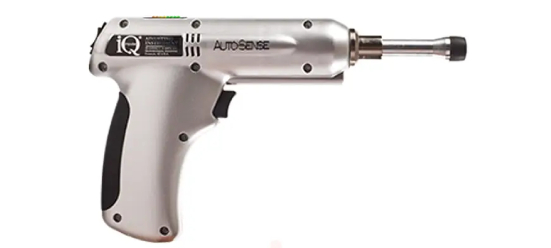
The Impulse iQ is a cutting-edge, computerized instrument designed to deliver fast, gentle, and highly accurate spinal and extremity adjustments. Unlike traditional manual techniques that rely on guesswork or forceful thrusts, this intelligent device uses real-time feedback to adapt each adjustment to your body’s response, automatically. No popping, twisting, or cracking, just efficient, precision-based care.
How It Works
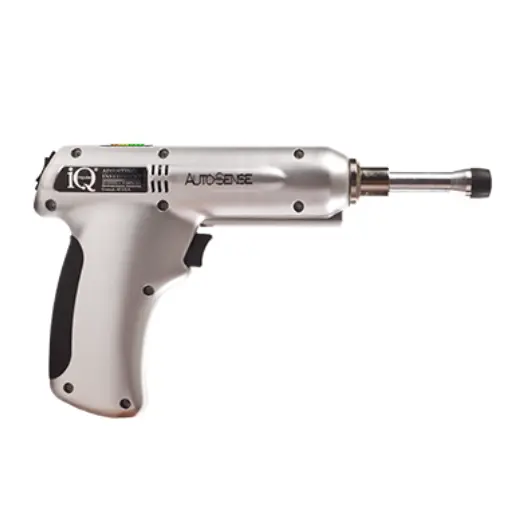
At the core of the Impulse iQ is its patented Auto-Sense Technology, which listens and responds to how your spine is moving in real time. As the joint begins to move better, the instrument senses the improvement and instantly adjusts its frequency to match the natural response of your body. The result? Smarter, faster, more efficient treatment with no unnecessary force.
Why It’s Different
While traditional Physical therapy and chiropractic or manual mobilizations require physical effort and patient tolerance to pressure, the Impulse iQ uses:
-

Micro-computer circuitry to deliver consistent, reproducible forces
-
High-speed thrusts (up to 100x faster than manual techniques) to outpace muscle guarding
-
Multiple force settings to tailor the treatment to your age, body size, and sensitivity
-
Audible & visual feedback to guide the therapist in real time
This allows for deeply therapeutic adjustments with far less physical strain for both the patient and the therapist.
The Impulse iQ promotes healing by:

Restoring joint mobility through gentle oscillatory thrusts
Decreasing muscle tension and neurological guarding
Improving spinal biomechanics and motion segment coordination
Supporting faster recovery without triggering pain pathways
It’s a unique balance of science, technology, and clinical intuition, ideal for acute injuries, chronic pain, and sensitive conditions.
Clinical Benefits
Patients often report feeling:
-
Less pain and stiffness
-
Improved mobility and posture
-
Faster recovery after injuries or flare-ups
-
Better overall alignment and spinal control
And because there’s no cracking or twisting, even anxious patients or those new to manual therapy feel comfortable and relaxed.
Conditions Treated
The Impulse iQ is commonly used for:
-

Neck and low back pain
-
Headaches and migraines
-
Sciatica and pinched nerves
-
Post-accident injuries
-
Thoracic and rib restrictions
-
Shoulder, elbow, wrist, and other extremity pain
It’s especially effective for individuals who are sensitive to traditional manipulations, including seniors, children, or those with acute injuries.