A Physical Therapy Franchise should offer therapists more than clinic ownership: a differentiated clinical model, tested operational systems, and a brand patients already recognize. But not all franchises are the same. Most hand you a brand and a playbook while leaving you inside the same insurance system you were trying to leave. The real value is lower patient acquisition cost with a value proposition, and that only comes from a care model patients cannot find elsewhere. Shiva Physical Therapy, based in Apex, North Carolina, builds its franchise around The S.H.I.V.A. Method, a regenerative Physical Therapy model and a cash-based niche structure designed to make that difference in MSK care delivery.
Most of us came into this profession for one reason. We wanted to help people move again, get out of pain, and get back to their lives.
Then a few years pass. You see multiple patients an hour, chart until late at night and on weekends, and watch your reimbursement drop while your productivity target climbs. The clinical work you trained for keeps getting squeezed into the fifteen minutes between the tech and the documentation.
That gap between why you started and what your days have become is pushing more therapists toward clinic ownership, and the control over their careers that comes with it. A physical therapy franchise is one route there. It is not the only one, and it is not right for everybody. But one question underlies the whole decision that almost nobody asks out loud, and getting it wrong costs people years.
Demand for the profession is not the issue. The Bureau of Labor Statistics projects physical therapist employment to grow 11 percent from 2024 to 2034, much faster than average, with roughly 13,200 openings each year over the decade. There is no shortage of work.
The dissatisfaction is about the conditions of the work, not the availability of it.
Volume-based reimbursement shapes everything downstream of it:
None of that reflects poorly on the therapists inside those systems. It reflects the incentives of the payment model they are working within.
You have seen the headline stat. It is worth knowing what sits underneath it.
A 2023 national survey of 2,813 US physical therapists found that just under half, 49.34 percent, reported being burned out. The same study found that providing or receiving formal mentorship and higher self-efficacy were both associated with lower burnout scores.
Here is the honest part most articles leave out. A systematic review and meta-analysis pooling 32 studies across 17 countries put the overall burnout prevalence at 8 percent, and the authors specifically cautioned that the wide variation between studies in how burnout was defined and measured prevents drawing firm conclusions.
So the number swings from 8 percent to nearly 50 percent depending on which instrument was used. Anyone quoting you a single confident figure is selling something. What the research consistently supports is the mentorship finding, which is the part relevant to this conversation.

A physical therapy franchise lets a therapist or a healthcare entrepreneur operate under an established brand while using clinical and operational systems that have already been built, tested, and corrected.
Instead of designing everything from zero, you get access to:
The difference from a standard physical therapy startup is not that a franchise removes the work. It is that you are not paying tuition in trial and error for the first 5 years.
That is the standard pitch, and it is true as far as it goes. Now here is the part the Franchise brochures skip.
You are probably expecting this section to tell you franchising is the answer. It might not be. It depends entirely on which kind you buy, and on how much autonomy you are actually looking for.
Because there are four different models a therapist can end up owning, and they are not four flavors of the same thing. They are four different answers to one question: who decides how you practice?
So let us compare them one pair at a time, so you can see exactly which one you would be walking into.
This is the move most therapists picture when they think about franchising. You stop building alone. You get a brand, a system, a training program, group purchasing, and somebody to call at 9 p.m. when the billing software breaks or a claim comes back denied. All of that is real. None of it is nothing.
| Independent Clinic | Insurance-Based Franchise | |
|---|---|---|
| Brand | Built from nothing | Established and positioned |
| Systems | Trial and error | Tested and corrected |
| Clinical protocols | Developed alone | Defined playbook provided |
| Marketing | Built from scratch | Assets and messaging provided |
| Support | You solve everything | Mentorship and peer network |
| Startup speed | Slow | Faster |
| Decision-making | Full autonomy | Within the system’s standards |
| Who controls your revenue | The payer | Still the payer |
Look at that last row.
You got a brand. You got systems. You got support. What you did not get is control of your revenue. The payer still sets the rate. The payer still sets the visit limit. The documentation burden is the same. And the unit economics still say you need volume to make it work, which means the schedule density that burned you out in the first place is now your own business model.
So what actually changed about your Tuesday?
You traded an employer for a franchisor. That is a real trade and sometimes a good one. But if you left employment to escape insurance-driven care, and you bought a franchise that runs on insurance-driven care, it seems like the thing you were running from came with you.
That is not an escape. That is a change of address.
The hybrid model is the honest middle. You stay in network with some payers, and you offer cash services alongside: wellness, advanced technology, performance work- anything insurance will not cover.
This genuinely helps. It should not be dismissed.
| Insurance-Based Model | Hybrid Model | |
|---|---|---|
| Revenue | All revenue payer-controlled | Part of revenue you control |
| Services | Cannot offer non-covered services | Can offer advanced technology |
| Pricing | Rate set entirely externally | Partial pricing control |
| Operations | One system to run | Two systems to run |
| Patient identity | Clear identity to patients | Mixed message to patients |
| Volume | Volume required | Volume still required |
Here is where the hybrid model gets difficult, and anyone who has run one knows it.
You are operating two businesses out of one building. Two schedules, two conversations, two fee structures, two sets of expectations. Your front desk has to explain which one the patient is in. And in most hybrid clinics, the insurance side quietly subsidizes the cash side, which means the insurance side still dictates how densely you schedule.
The patient also cannot tell what you are. Are you an in-network clinic or a specialty clinic? When your positioning is both, your positioning is neither.
Hybrid is a good bridge. It is a hard place to live permanently.
Now the payer is out of the room.
| Hybrid Model | Fully Cash-Based | |
|---|---|---|
| Pricing | Partial pricing control | You set your fees |
| Authorization | Some authorization constraints | No authorization required |
| Documentation | Documentation serves billing | Documentation serves care |
| Clinical identity | Split clinical identity | One clear model |
| Where patients come from | Payer directory sends patients | You generate every patient |
| Volume | Volume still required | Time per patient is yours |
Everything on the left side of the ledger improves. You decide the length of the session. You decide when the patient is done. You invest in technology because the outcome justifies it, not because a CPT code exists for it.
This is what people mean when they say cash-based gives you freedom. And they are right.
But look at the second-to-last row, because that is the one that closes clinics.
When you were in the network, the payer directory was doing quiet marketing for you every single day. Patients found you because you were on a list. The moment you go fully cash-based, that stops. Now you generate one hundred percent of your own demand.
Freedom and an empty schedule can look identical on a Tuesday afternoon.
From that day forward, your practice runs on two numbers: what it costs you to acquire a patient, and how many of those patients finish the plan of care. Acquisition cost and retention. In my experience, cash-based clinics that fail rarely fail because the therapist could not treat. They fail on one of those two numbers.
So the coaching industry arrives with the fix. Run paid ads. Build the funnel. Use this script. Book more discovery calls. Some of that advice is fine. Almost none of it touches the actual problem, and here is why.
Ask yourself the uncomfortable question first: what am I actually selling that is different?
Then ask the second one, which is the question most people avoid. After the ads, the rent, the staff, the software, and the technology, what is actually left for you? Revenue is not income. A cash-based clinic can post impressive gross numbers and still pay its owner less per hour than the job they walked away from, because every single patient had to be bought. Work out your take-home for every hour you put into the business, not just what the clinic bills.
Both questions have the same root.
The standard cash-based answer goes something like this. One full hour. One-on-one. A doctor of physical therapy with you the entire time, not a tech. Maybe a modality or two the clinic down the street does not have, or the same exercises and manual therapy wrapped in a nicer package.
Now look at that honestly. Same conditions. Same exercises. Same clinical reasoning. Same progressions, out of the same textbooks, aimed at the same niches. What you upgraded is the delivery of the care. You did not change the care. You only changed who pays for it, and how it feels while it is delivered.
So is that a true differentiator? Is it something a patient is willing to spend their own money on, when their insurance will cover something that looks broadly similar for a copay?
Some will. Patients who have been run through a traditional physical therapy mill, who value time and attention, who are simply handed off to an aide, will absolutely pay for the experience. That is a real market, and it is not nothing.
But notice what you are selling them. An experience, not expertise.
An experience has three problems. They are fragile, because the patient re-evaluates the decision every time they hand over a card. They are easy to copy, because any clinic in your market can start offering an hour of one-on-one care next month and erase your advantage. And they drop you right back into competing on price and rapport, which is the exact position you left insurance to get out of.
If you go cash-based and still deliver what every other clinic in town delivers, you have asked patients to pay more for the same thing. How were you supposed to win that argument?
The question that actually matters is not: How do I market this better? It is this: what could I offer that a patient genuinely cannot get anywhere else in this region?
That question has an answer. This is the choice almost nobody makes, and it is the one that changes the economics.
| General Cash-Based | Cash-Based Niche | |
|---|---|---|
| Competition | Competes with every clinic | Competes with almost nobody |
| What you sell | Sells a better experience | Sells a different capability |
| Price comparison | Patients compare you on price | No obvious comparison exists |
| Patient intent | Must persuade patients to come | Patients arrive already looking |
| Volume driver | Marketing spend drives volume | Reputation drives volume |
| Physician referrals | Generic physician referrals | Referrals for a specific problem |
| Retention | Retention depends on rapport | Retention depends on the model |
| Durability | Copied in a month | Takes years to build |
The difference between the two columns is not effort or marketing budget. It is whether the thing you are selling is a service upgrade or a clinical capability.
A real niche practice is the one that barely needs advertising. Its patient acquisition cost is the lowest in the market for a simple reason: patients are not being persuaded to come. They searched for a specific solution to a specific problem and found out you are one of the few places in the region that offers it.
You stop chasing patients. They seek you out.
That single shift changes everything downstream. Acquisition cost drops, because search and word of mouth are doing work your ad budget used to do. Pricing power appears, because there is nothing to compare against. Retention improves, because the patient came for the model rather than for the convenience, and they understand why the plan of care has a shape. Physician referrals become a pattern instead of a favor, because the surgeon now has a specific category of patient who needs what you do. They need you as much as you need them.
And you cannot buy any of that with branding. You can only build it on a care model that genuinely does something the clinic down the road cannot do.
| Insurance Franchise | Hybrid | Cash-Based | Cash-Based Niche | |
|---|---|---|---|---|
| Who sets your fee | Payer | Split | You | You |
| Time per patient | Payer-driven | Mixed | Yours | Yours |
| Documentation serves | Billing | Both | Care | Care |
| Who ends the plan of care | Authorization | Mixed | Clinician | Clinician |
| Where patients come from | Payer directory | Both | Your marketing | Search and referral |
| Patient acquisition cost | Low but capped rate | Moderate | High | Lowest |
| Pricing power | None | Limited | Some | Strong |
| Technology investment | Hard to justify | Possible | Possible | Core to the model |
| If ad spend stops | Volume holds | Volume dips | Volume falls | Volume holds |
| Real clinical freedom | No | Partial | Yes | Yes, with demand |
Read the bottom two rows together. That is the entire argument.
Roughly half of new US businesses do not reach their fifth year, according to Bureau of Labor Statistics survival data. Physical therapy clinics are not exempt, and the reason usually has nothing to do with clinical skill.
Most therapists who open their own practice execute beautifully for the first several months. Energy is high, the space looks good, friends and former patients fill the schedule, and the early numbers feel encouraging.
Then the warm network runs out.
Now you are competing for strangers, in a market where every clinic within ten miles is running the same ads, promising the same personalized care, and bidding on the same keywords. Acquisition cost climbs. Retention slips, because the model is not different enough for patients to finish the plan of care. And you start spending money on marketing to solve what is actually a positioning problem.
No funnel fixes a positioning problem. It only makes it more expensive.
Which leaves the question from the last comparison still sitting there. What could you offer that a patient genuinely cannot get anywhere else?
Most franchises hand you a recognizable name and a business playbook. Very few hand you a differentiated clinical system, because building one takes decades of practice and a willingness to be specific about what you do.
Every Shiva Physical Therapy franchise is built on The S.H.I.V.A. Method, A 5-Phase Regenerative Framework developed over more than two decades of clinical work. It is the applied form of Regenerative Physical Therapy: a non-invasive, whole-system approach to musculoskeletal rehabilitation that works at three connected levels: the tissue, the nervous system, and the mind. It combines advanced therapeutic technology, manual therapy, progressive loading, and pain neuroscience education to rebuild function and support recovery that holds, with no injections, PRP, stem cells, or surgery involved.
The positioning matters, so let me be precise about it. This is not a replacement for surgery, and it is not a replacement for exercise. Some patients do well with exercise alone. Some have deteriorated far enough that surgery is the right call. The gap sits between those two: the tier of conservative options that exists between standard physical therapy and invasive intervention. Most patients get moved straight from one to the other without ever being offered that middle tier.
That is the space Regenerative Physical Therapy occupies. The best conservative option still available before going invasive.
For a franchise owner, that is not a marketing angle. It is a referral pattern. Surgeons and physicians have patients who are not surgical candidates yet and have plateaued in standard care. When you are the clinic in your region with a defined pathway for those patients, you have a reason for the referral to exist.
That is what the fourth comparison looks like in practice. The niche is not a marketing segment. It is a clinical lane.
Whatever you decide about Shiva, do not sign anything with anyone until you have asked them. A franchisor who answers them clearly is worth talking to. A franchisor who gets uncomfortable has told you what you needed to know.
Eleven questions. Ask them of every franchise you evaluate, including this one.

Scalability is not a bigger space or a longer schedule. It is a business that works the same way when you are not standing in it.
That comes down to repeatable structure:
The last one is where independent clinics usually stall. If the model lives in the owner’s head, the practice cannot grow past the owner’s hands. A defined clinical framework is what makes a second clinician, and eventually a second location, possible.
Being an excellent therapist does not make you a business owner. Those are different skills, and nobody teaches the second one in a DPT program.
Franchise ownership requires you to hire, delegate, read financials, hold standards, and make decisions with incomplete information. Shiva Physical Therapy franchisees receive structured support in team management, hiring, practice management, business planning, and performance monitoring.
Notice this connects back to the research above. Mentorship was one of the few factors consistently associated with lower burnout in the national data. Ownership without support tends to trade one form of exhaustion for another.
I would rather you hear this from me than discover it in year one.
A physical therapy franchise is not the right choice for every physical therapy entrepreneur if:
Franchise ownership is a commitment, not a shortcut. Anyone who tells you otherwise is not being straight with you.
What distinguishes this franchise:
The goal is not to open another Physical therapy clinic in a crowded market. It is to occupy the conservative-care gap that most markets leave completely unserved.
Owning a physical therapy franchise is not really about the ownership. It is about whose terms you practice on.
An insurance-based franchise gives you a brand and leaves the payer in charge. A hybrid gives you partial relief and two businesses to run. A cash-based clinic gives you genuine clinical freedom and hands you the entire burden of demand. A cash-based niche clinic is the only one of the four where freedom and demand arrive together.
Those are the four. Which one you choose determines almost everything else about your career.
If you are a clinician who wants to build something durable, or an entrepreneur looking at a physical therapy business opportunity with real clinical differentiation behind it, the conversation is worth having.
Schedule a franchise discovery call with Shiva Physical Therapy to review the model, the Franchise Disclosure Document, and whether this is the right fit for you. Call 919-985-6389 or visit shivaphysicaltherapy.com.
A physical therapy franchise lets a therapist or entrepreneur operate a clinic under an established brand using clinical protocols, operational systems, marketing resources, and ongoing support that have already been developed and tested, rather than building all of it independently.
Neither option is universally better; the right choice depends on your desired level of autonomy, payment model, and business support. A franchise shortens the learning curve, at the cost of some autonomy and ongoing fees. But if the franchise runs on insurance reimbursement, you have kept the constraint that most therapists are trying to leave. Evaluate the payment model before you evaluate the brand.
An insurance-based model leaves rates, visit limits, and documentation requirements in the payer’s hands. A hybrid model keeps some in-network revenue while adding cash services, which helps margins but means running two systems and presenting a mixed identity to patients. A cash-based model puts pricing and clinical decisions entirely with the clinician, but requires you to generate all of your own demand. A cash-based niche model solves that last problem by giving patients a specific reason to seek you out.
That depends on your state. Physical therapy ownership rules vary considerably. Some states require licensed physical therapists to hold a controlling ownership interest, and others restrict which business entities may deliver physical therapy services at all. We review the specific requirements for your state during the discovery process, and the Franchise Disclosure Document sets out ownership and licensure requirements in detail.
Yes, if you have a real niche. Musculoskeletal pain exists in every population, and so does the gap between standard physical therapy and surgery, so when you are the clinic that fills that gap, the patients who need you are already in your market, already looking, and not finding it. What does not work anywhere is cash-based care without a niche, because asking patients to pay out of pocket for the same exercises and manual therapy every in-network clinic already offers is a hard sell in any zip code, and no amount of favorable demographics will rescue it. So the real question is not whether your market can support cash-based care, but whether you are offering something your market cannot already get. What varies from one location to another is the size of your catchment and how quickly it fills, not whether the need is there, and we work through both with you during the discovery process.
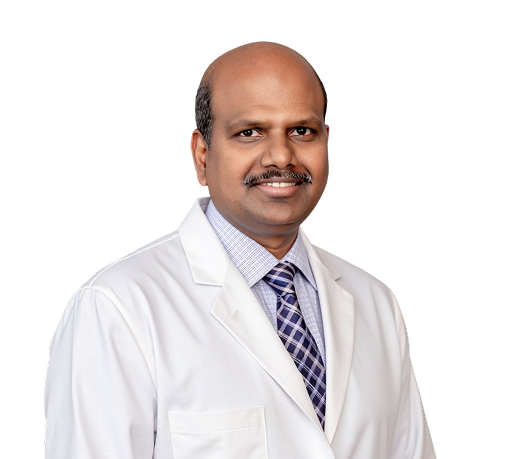
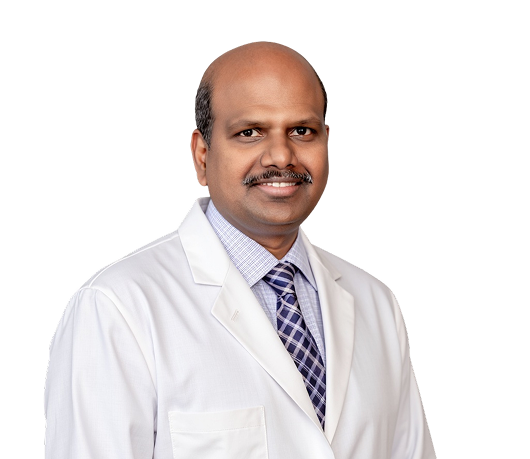
Dr. Siva Parnam, PT, DPT, Osteopractor
Founder, Shiva Physical Therapy | Creator of The S.H.I.V.A. Method
Dr. Parnam is a pioneer of Regenerative Physical Therapy and the architect of a clinical model that integrates advanced therapeutic technology, neuroplastic re-education, and biopsychosocial care into musculoskeletal rehabilitation. With more than two decades of clinical experience, his work focuses on non-invasive, whole-system recovery for patients with acute injuries, chronic pain, tendon and joint conditions, post-surgical plateaus, and complex cases that have not responded to conventional physical therapy.

A Stage-Specific, Non-Invasive Approach with the S.H.I.V.A. Method.

How to Choose the Right Physical Therapist: A Patient-Friendly Guide.

Empowering You to Make Informed, Personalized Care Decisions.
Submit the form and a member of the Shiva Physical Therapy franchise team will reach out within 48 business hours to schedule your discovery call. A direct conversation with leadership about fit, not a sales pitch.
Territories are awarded to one clinician each. Early applicants are reviewed first.
 Physical Therapy Franchise
Cash-Based Practice
Clinic Ownership
S.H.I.V.A. Method
Regenerative Physical Therapy
Franchise Disclosure Document